Move your berries out of the supermarket clamshell the moment you get home, keep them completely dry, and store them in a single layer inside a breathable glass, ceramic or linen container. That’s it. That one change does more for berry freshness than any other single step, because sealed plastic traps moisture against the fruit’s surface and moisture is what feeds mould.

Here’s the short version, before we get into the why and the how:

  • A wide-mouth glass jar with a loose-fitting lid, not snapped shut
  • A flax linen or cotton produce bag for short-term fridge storage
  • A perforated ceramic bowl or stainless steel colander lined with a dry towel
  • A paper or cotton towel underneath the berries to wick away excess moisture

None of this requires special equipment. It requires undoing a habit: the instinct to leave berries in the plastic box they arrived in, or to tip them into an airtight tub the moment you unpack the shopping.

Key takeaways

Berries stored dry, in a single layer, inside a breathable glass, ceramic or linen container outlast anything left sealed in its original plastic clamshell.

Point Details
Ditch the clamshell first Sealed plastic traps humidity against the fruit, which is the main driver of early mould.
Never wash before storing Rinse only right before eating; wash-and-store-damp is the fastest route to a mouldy punnet.
Single layer, dry liner Use a paper or cotton towel base and avoid stacking berries on top of each other.
Skip the crisper drawer A middle or top shelf around 0.5 to 2°C beats the humid crisper drawer for berries.
Reach for The Zero Store’s plastic-free range Produce bags, cling wrap alternatives and resealable bags cover fridge, cover-and-store, and freezer needs without single-use plastic.

Table of Contents

Quick action checklist you can follow in the next 5 minutes

Do this as soon as you’re home from the shops, before the berries even go near the fridge.

  • Sort first. Tip the punnet out and remove any berry that’s bruised, split, leaking juice or growing fuzz. One bad strawberry will take out its neighbours within a day.
  • Don’t wash them yet. Rinsing now adds moisture you can’t fully remove, and that moisture sits on the fruit for hours before it gets used. Wash only right before eating.
  • Line, layer, and let air move. Put a dry paper towel or cotton cloth in your chosen container, arrange the berries in a single layer (or as close to it as space allows), and use a container that isn’t sealed drum-tight.
  • Find the coldest shelf, not the crisper drawer. Crisper drawers are built to hold humidity in, which is the opposite of what berries need.
  • Don’t overcrowd the container. Stacked berries bruise each other, and bruised fruit spoils fastest.

Pro Tip: When you’re still at the shop, tip the punnet slightly and look for juice pooling in the corners of the plastic clamshell. That’s condensation and leaked juice from fruit that’s already breaking down, even if nothing looks obviously bad on top. Skip that punnet.

Why supermarket clamshells and airtight plastic speed up spoilage

Berries are mostly water and they have almost no protective skin compared with something like an apple or a citrus fruit. That thin skin means moisture moves in and out constantly, and when it has nowhere to go, it condenses on the inside of whatever they’re sitting in.

Packaging that traps humidity near the fruit lets moisture build toward saturation, and that near-saturated air is exactly what fungal spores need to germinate and spread across a punnet.

That’s the mechanism behind postharvest research from Washington State University, which documents how sealed, high-humidity environments accelerate fungal growth on soft fruit. A supermarket clamshell does precisely this: it’s designed to look nice on a shelf, not to manage moisture once it’s in your fridge. The little vents punched into some clamshell lids help a little, but most of the box is still solid plastic holding condensation against the fruit.

Guidance from UC Davis on postharvest handling makes a similar point from the growers’ side: moisture management, not temperature alone, is the variable that determines how long delicate fruit stays saleable. An airtight glass or plastic tub with a snap-on lid can actually be worse than the clamshell it replaced, because a fully sealed system has nowhere for that humidity to escape at all. A loose lid, a vented basket, or a breathable fabric bag gives moisture somewhere to go instead of condensing straight back onto the fruit.

Why supermarket clamshells and airtight plastic speed up spoilage — overview diagram

Best plastic-free storage methods and exactly how to set them up

Different materials suit different situations. Here’s what actually works and how to set each one up properly.

Glass jars and containers. Best for strawberries, blueberries and raspberries you’ll eat within a few days. Line the base with a dry paper towel or a reusable cotton cloth, add berries in a single layer, and rest the lid on top without clicking it shut. The towel absorbs surface moisture; the loose lid lets humid air escape rather than recycling back onto the fruit.

Perforated ceramic bowls or stainless steel colanders. Good for a fruit bowl you’ll dip into throughout the day. The holes provide constant airflow, so there’s less need for a towel liner, though one still helps if the bowl sits somewhere warm.

Flax linen or cotton produce bags. Ideal for short-term fridge storage, especially for delicate raspberries and blackberries that bruise if stacked. Linen storage bags work by combining airflow through the weave with gentle moisture wicking from the natural fibre, which keeps the surface of the fruit drier than a sealed bag ever could. Wash them on a gentle cycle and air-dry; avoid fabric softener, which can clog the weave and reduce breathability over time.

Reusable cling wrap alternatives. These have a role, but it’s covering a bowl loosely, not sealing berries in direct contact. A biodegradable cling wrap draped over a bowl keeps dust and fridge odours out while still letting the fruit breathe, which is a very different job to the tight plastic wrap most people are used to pressing directly onto food.

Storage option Best for Airflow level Care needed
Glass jar, loose lid Strawberries, blueberries, 3 to 5 day use Moderate Wash and dry jar between uses
Perforated ceramic bowl Daily snacking fruit bowl High Wipe clean, no liner strictly required
Linen or cotton produce bag Raspberries, blackberries, delicate fruit High Gentle wash, air dry, no fabric softener
Reusable cling wrap over a bowl Covering prepped fruit, short fridge stints Low to moderate Wipe and reuse per product guidance

Pro Tip: A silicone or vented cover that sits loosely over a bowl often outperforms a snap-top lid for exactly the same reason a loose jar lid does: it lets a small amount of air exchange happen instead of sealing humidity in with the fruit.

The pattern across every option is the same: dry base, single layer, airflow. The material you pick matters less than whether you’ve actually built those three things into the setup.

How to sort, clean and dry berries before you store them

  1. Tip the whole punnet onto a clean towel or tray. Don’t just glance at the top layer, since the squashed ones tend to hide underneath.
  2. Remove anything soft, leaking, or fuzzy and bin it straight away, not back in with the good fruit “for now.”
  3. Skip washing at this stage, unless you’re using the vinegar method below.
  4. If freezing strawberries, remove the green caps now, while the fruit is dry and easy to handle.
  5. If you want to wash before storing (optional), use a light vinegar bath: one part white vinegar to three parts water, a 30 second dip, then a rinse in clean water.
  6. Dry completely. Spread berries on a paper towel or clean cotton cloth and let them air dry for at least two hours. A salad spinner can speed this up for sturdier berries like blueberries, but go gently with raspberries, which bruise in a spinner.
  7. Only move dry fruit into storage. Damp berries left in a container, however breathable, will still spoil faster than fruit that’s genuinely dry to the touch.

Leaving berries unwashed until the moment you eat them preserves their natural surface defences, and it’s the single biggest reason chef-recommended storage methods skip washing entirely.

That vinegar step divides opinion, and rightly so. It helps if you’re prepping a big batch for freezing or you know you won’t get to the fruit for several days. For berries you’re eating within a day or two, it’s an extra step for very little gain, and a rushed dry job does more harm than the wash was ever going to fix.

Where to put berries in the fridge for the best airflow

The crisper drawer feels like the obvious spot, but it’s often the wrong one. Crisper drawers are designed to hold in humidity for leafy vegetables that wilt without it. Berries need the opposite: a cold, drier environment with some air movement.

  • Use a middle or top shelf, not the crisper drawer, for your berry container.
  • Keep the fridge between roughly 0.5°C and 2°C for berries specifically. A cheap fridge thermometer will tell you if your fridge runs warmer than the dial suggests, which many do.
  • Don’t push the container to the back against the cooling vent, where airflow is strongest and can actually dry berries out unevenly, and don’t wedge it between other food where air can’t circulate at all.
  • Leave a gap around the container rather than sliding it flush against other items. A little breathing room around the whole setup matters as much as breathing room inside it.
  • Check daily. Berries change fast, and catching one soft berry on day two saves the rest of the batch.

Freezing berries without plastic for longer-term storage

Fresh storage buys you a week at most. Freezing buys you months, and it’s just as easy to do without single-use plastic.

  1. Prep as above: sort, hull strawberries if needed, and make sure everything is completely dry.
  2. Flash-freeze in a single layer on a tray lined with baking paper or parchment. This stops the berries clumping into one solid block, which matters because you’ll want to grab a handful later without hacking at a frozen brick.
  3. Leave the tray in the freezer for two to three hours, until each berry is frozen solid on its own.
  4. Transfer into a reusable container. A resealable food storage bag works well here, pressed gently to release excess air before sealing, or use a rigid container if you’d rather stack flat in the freezer door.
  5. Label with the date. Frozen berries hold their quality well for around eight to twelve months, but flavour and texture do fade the longer they sit.
  6. Use thawed berries in cooked applications, not as a fresh-eating substitute. Freezing bursts some of the fruit’s cell walls, so thawed berries turn soft and release more juice, which makes them perfect for smoothies, compotes, sauces and baking, but a poor stand-in for a fresh fruit salad.

Pro Tip: Don’t skip the flash-freeze step and go straight into a bag. Berries frozen loose in a bag straight from the fridge will freeze together into one lump, and you’ll end up defrosting the whole bag just to get a handful out.

Common mistakes that ruin plastic-free berry storage

Even with the right container, a few habits undo all the benefit.

  • Washing berries the moment you get home. Fix: rinse only right before eating, or use the vinegar method followed by a full two-hour dry.
  • Overcrowding the container. Fix: use a wider, shallower container rather than a deep one, and split a large punnet across two containers if needed.
  • Sealing an airtight lid tight shut. Fix: rest the lid loosely, or swap for a vented or perforated container entirely.
  • Storing damaged fruit alongside good fruit “to use up first.” Fix: separate them immediately. A damaged berry doesn’t wait its turn; it spreads mould to whatever it’s touching.
  • Ignoring the crisper drawer’s humidity setting. Fix: keep berries on a main shelf where the air is drier and colder.

Mould spreads through direct contact and through spores released into a shared airspace, so one visibly affected berry left in a punnet for even a day can pass fuzz onto fruit that looked perfectly fine the night before.

If you catch spoilage early, the batch is often salvageable: pull every affected berry, wipe out and fully dry the container, re-lay a fresh dry towel, and re-layer the remaining good fruit with a bit more space between pieces than before. If more than a small handful in the punnet are already affected, or you can smell fermentation, it’s not worth sorting through. Bin the lot.

What the research and chef testing actually show

The advice in this article isn’t guesswork stitched together from habit. It lines up with both postharvest science and hands-on kitchen testing.

On the science side, postharvest research and UC Davis extension materials both point to humidity, not temperature alone, as the main driver of mould on soft fruit after harvest. On the kitchen side, the chefs interviewed by Food & Wine consistently push the same two habits: skip the early wash, and store in glass, stainless or perforated ceramic lined with something absorbent.

Consumer testing backs this up with numbers. One comparative shelf-life guide reports glass containers lined with paper towel outperforming sealed plastic clamshells by roughly 40% in side-by-side shelf-life comparisons, with single-layer storage around 0.5 to 2°C giving the best results.

Test comparison Reported outcome
Glass with paper towel liner vs plastic clamshell Roughly 40% longer shelf life for glass
Single layer at 0.5 to 2°C vs crowded, warmer storage Freshness preserved best at the lower, single-layer setup
Vented containers with inner baskets vs standard sealed tubs Less pooled water, mould held off longer across a seven-day test

That vented-container finding comes from The Kitchn’s household testing, which found containers with a raised inner basket or built-in venting kept strawberries mould-free for longer than flat-bottomed sealed tubs across a week of use. It’s worth being clear that this is practical household testing rather than a controlled laboratory trial, but the direction of the result matches the postharvest science closely enough that it’s a reasonable basis for a kitchen habit, not just an anecdote.

Why we recommend plastic-free berry storage

The Zero Store exists because single-use plastic packaging solves a shelf-life problem in the worst possible way: it looks tidy for a day, then traps moisture and speeds up exactly the spoilage it was supposed to prevent. Everything we make, from cling wrap alternatives to resealable bags, is built from bio-polymers like PLA and PBAT specifically so households can store food properly without adding to the plastic pile.

We’re confident recommending breathable glass, linen and ceramic storage because it’s the same principle behind our own product range: let air move, keep moisture managed, and cut out the sealed plastic that’s doing more harm than good. If a product doesn’t perform the way we say it does, our returns process covers you, and product pages carry full material and care details so you know exactly what you’re buying and how to look after it.

Plastic-free storage products that solve this problem properly

Once you’ve sorted your berries and picked a breathable container, the next question is usually what to cover things with or what to freeze into, and that’s where a proper plastic-free system earns its keep against ordinary cling film and zip-lock bags.

Resealable Food Storage Bags

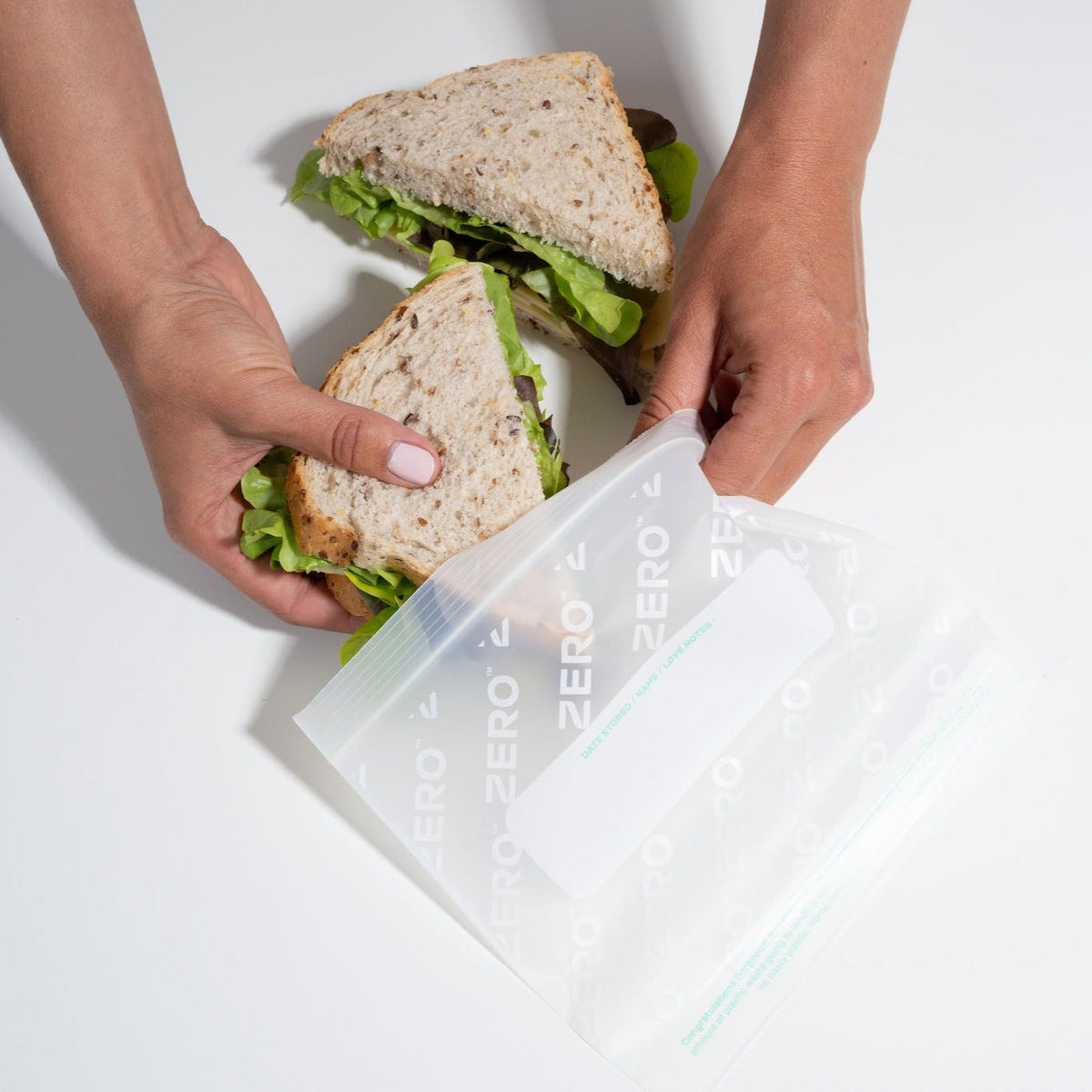
For covering a bowl of prepped berries in the fridge, The Zero Store’s Plastic-Free Cling Wrap does the job cling film normally does, minus the microplastic residue, and it’s breathable enough not to trap condensation the way tight plastic wrap does. For short-term fridge storage of a whole punnet’s worth, the Plastic Free Produce Bags (2 Pack) give you the airflow of a linen bag without buying a specialty textile product. When it’s time to move flash-frozen berries into the freezer for the long haul, Resealable Food Storage Bags hold up to repeated freezing and thawing far better than a single-use bag ever will. And for lining containers or wiping down a bowl before you fill it, Reusable Cleaning Cloths replace the paper towel habit entirely.

All four ship to addresses across Australia, and each one is designed to be reused for months rather than binned after a single punnet of strawberries. If you’re setting up a proper plastic-free kitchen for the first time, start with the produce bags and cling wrap, since those two cover the everyday habits that cause most berry waste in the first place.

Plastic-free storage products that solve this problem properly — overview diagram

Frequently asked questions

Do I really need to remove berries from the plastic punnet straight away? Yes. The punnet is designed for transport and shelf display, not for holding moisture-sensitive fruit fresh over several days. Transfer berries to a breathable container as soon as you unpack your shopping.

Can I store different berry types together? It’s better not to. Strawberries release more moisture and ethylene than blueberries, so mixing them can speed up spoilage in the more delicate fruit. Give each type its own container where possible.

Is a paper towel liner really necessary, or is that overkill? It genuinely helps. A dry towel wicks away the small amount of surface moisture berries naturally release, which is exactly the moisture that would otherwise sit and encourage mould in a sealed container.

How long do berries actually last using these methods? Most berries stored dry, single-layered and in a breathable container last five to seven days in the fridge, compared with two to three days left in their original clamshell. Frozen berries, prepared properly, hold quality for eight to twelve months.

What if I don’t have a spare glass jar or linen bag right now? A perforated ceramic bowl or even a plate covered loosely with a breathable cling wrap alternative works as a stopgap. The core habit, dry fruit and airflow, matters more than the exact vessel.

Sources

Latest Stories

This section doesn’t currently include any content. Add content to this section using the sidebar.