
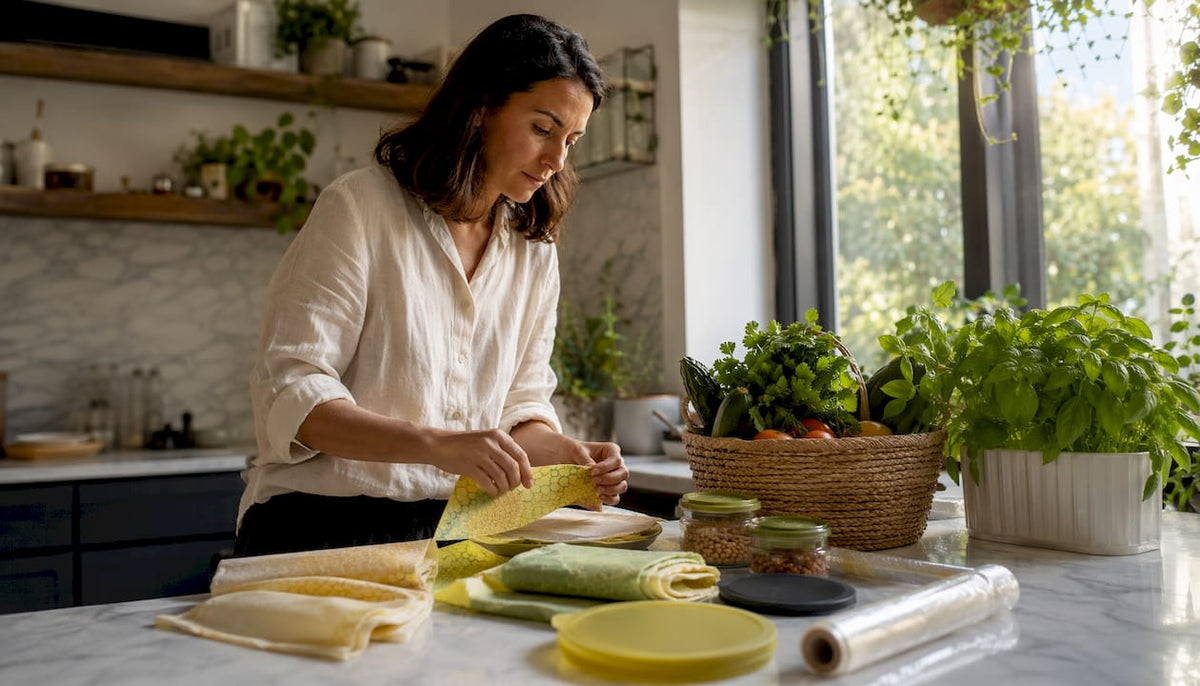
Reusable alternatives — beeswax wraps, silicone lids, food huggers, glass jars — should be your first choice for everyday food storage. Certified home-compostable cling wrap earns its place only when you genuinely have a composting route: a working home compost heap or a council food-waste collection that accepts compostable film. Without that route, even the best eco cling wrap ends up in landfill, where it behaves much like conventional plastic. If you do need a single-use wrap, The Zero Store’s plastic-free cling wrap is a certified, microplastic-free option worth keeping in the drawer for those occasions.
The short verdict: Switch to reusables for daily use. Keep one certified home-compostable roll for the moments reusables genuinely cannot cover — and only if you can guarantee it reaches a compost system.
Table of Contents
- Why conventional plastic cling film is worth ditching
- The best reusable and compostable alternatives, ranked by sustainability
- How compostable cling wrap works: materials and what they mean for performance
- What certifications should you look for in the UK?
- Where compostable cling wrap actually breaks down
- How to use and dispose of compostable cling wrap safely in the UK
- Quick buying checklist for the best compostable cling wrap
- Evidence snapshot: what the research actually shows
- Key takeaways
- The compostable wrap trap most shoppers fall into
- Where to check certifications, test results and local composting rules in the UK
- The Zero Store: plastic-free wraps and bags for UK households
Why conventional plastic cling film is worth ditching
Standard cling film is almost always made from low-density polyethylene (LDPE) or polyvinyl chloride (PVC). Neither material is widely recyclable through kerbside collections in the UK, and both persist in the environment for hundreds of years. As it degrades, it fragments into microplastics that enter soil, waterways, and food chains.
The practical problem runs deeper than the material itself, though. A swap to compostable film only changes the outcome if the disposal route changes too. Put a certified compostable wrap in a general waste bin and it goes to landfill, where the absence of oxygen and heat means it will not break down meaningfully. The material swap matters; the waste outcome is what decides the environmental result.
Key environmental concerns with conventional cling film:
- Fragments into microplastics during environmental degradation
- Not accepted in most UK kerbside recycling collections
- PVC formulations may contain plasticisers linked to health concerns
- No end-of-life pathway that recovers material value
Stat to know: CHOICE household experts confirm that the environmental benefit of compostable alternatives is only realised when the product is actually composted — not landfilled.
The best reusable and compostable alternatives, ranked by sustainability
Ranked from most to least sustainable, here is what to reach for instead of conventional cling film.
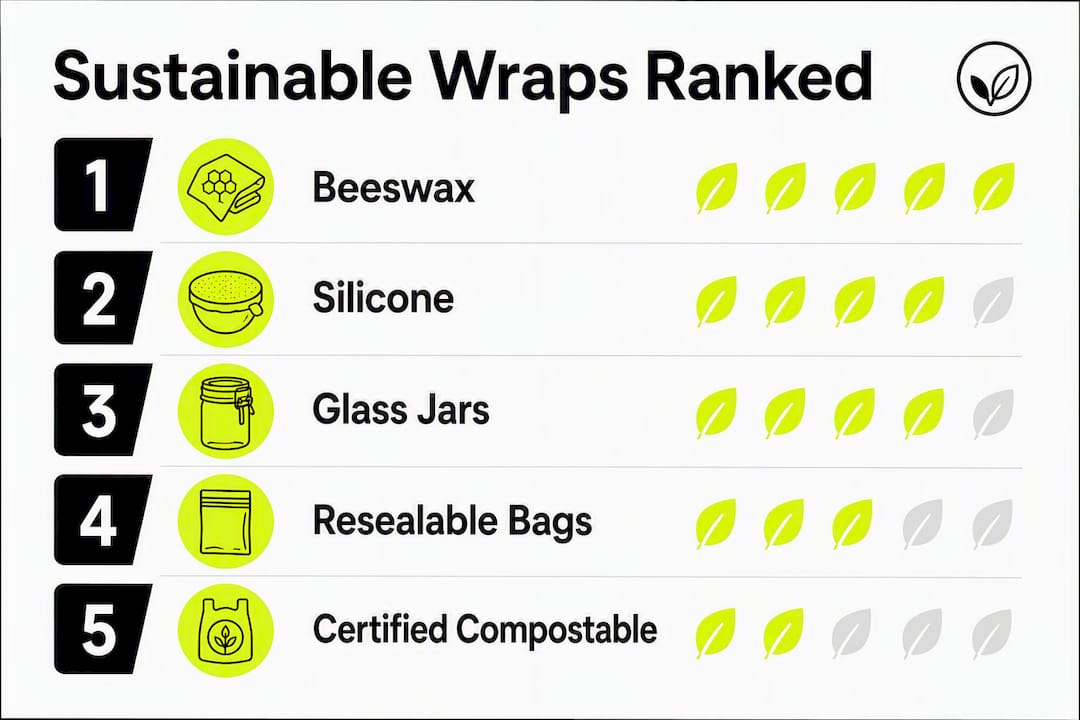
1. Beeswax wraps
The gold standard for fridge storage. Beeswax wraps cling to bowls, cover cut fruit, and wrap sandwiches without any single-use waste. They last up to a year with proper care, and at end of life they go straight into the compost. The limitation: they cannot handle hot food or go in the microwave, and they are not ideal for raw meat.
2. Silicone lids and food huggers
Silicone stretch lids fit over bowls, pots, and cut vegetables of almost any size. They are freezer-safe, dishwasher-safe, and last for years. Food huggers — silicone half-covers shaped for cut fruit and veg — solve the awkward-avocado problem better than any wrap. Neither produces any waste at all during their useful life.
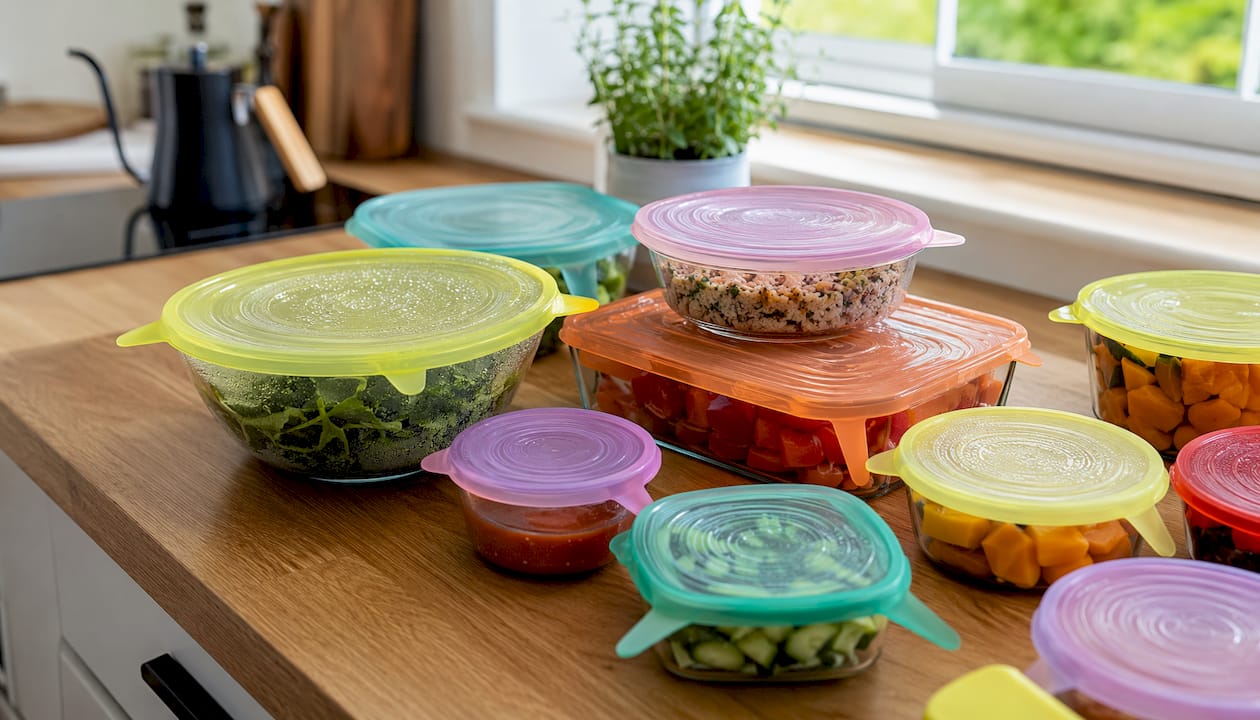
3. Glass jars and airtight containers
Boring but brilliant. A set of glass jars or BPA-free containers handles leftovers, batch cooking, and fridge storage with zero ongoing waste. The upfront cost is higher; the lifetime cost is negligible.
4. Resealable food storage bags
Resealable bags made from bio-polymers are a practical step up from single-use zip-lock bags. They work for sandwiches, snacks, and freezer portions, and they can be washed and reused. Look for bags made from PLA or PBAT rather than conventional polyethylene.
Pro Tip: For packed lunches, a resealable bag handles sandwiches better than any wrap — no wrestling with the roll, no sticky edges, and it doubles as a lunchbox liner.
5. Certified home-compostable cling wrap
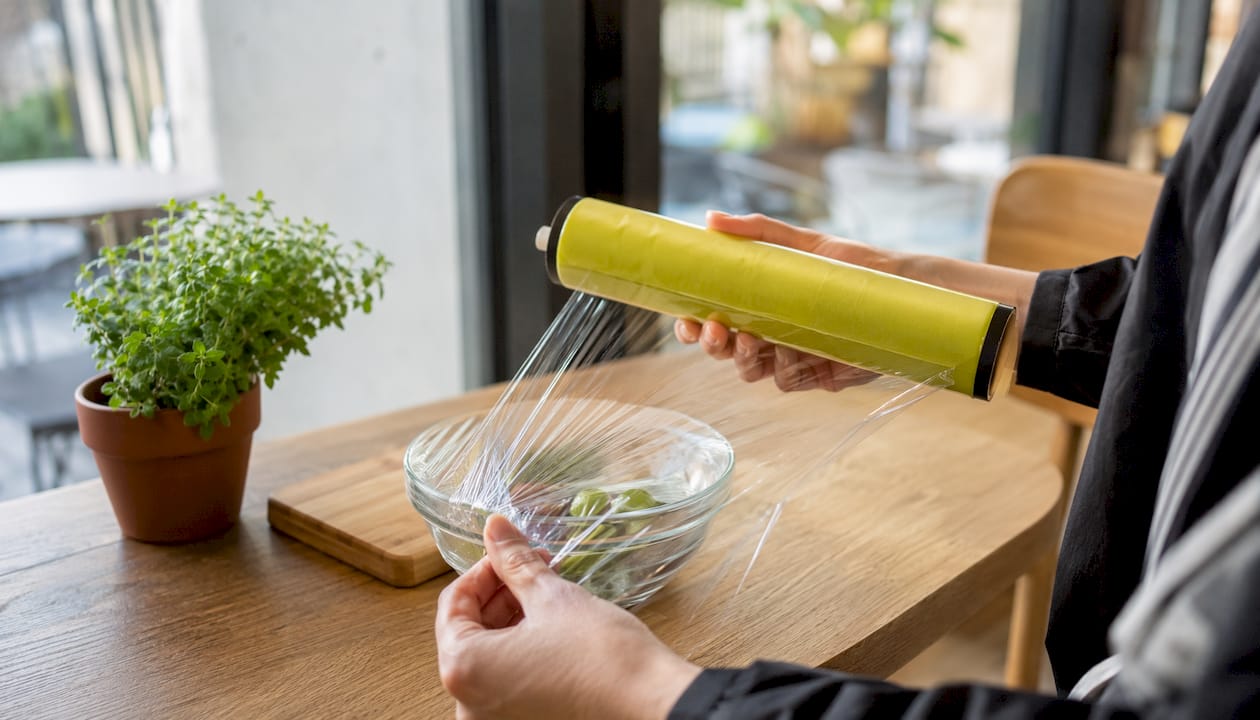
The last resort on this list, not the first. Compostable cling wrap is genuinely useful for covering bowls with awkward shapes, wrapping raw meat for short-term fridge storage, or any task where a reusable cover is impractical. Independent testing suggests comparable cling and stretch to conventional film in practical kitchen use. The catch: it only delivers an environmental benefit if it reaches a compost system.
How compostable cling wrap works: materials and what they mean for performance
Most certified compostable cling wraps are built from one of three material bases, and the choice affects how the film feels, stretches, and handles heat.
| Material | Cling and stretch | Heat resistance | Compostability |
|---|---|---|---|
| PLA (polylactic acid) | Good cling, moderate stretch | Lower; avoid prolonged heat | Industrial or home, depending on grade |
| PBAT (polybutylene adipate terephthalate) | Excellent stretch and flexibility | Better than PLA | Industrial composting typically required |
| PLA/PBAT blend | Balanced cling and stretch | Moderate | Varies; check certification |
| Starch-based film | Softer cling, less stretch | Low | Often home-compostable |
PLA is derived from fermented plant sugars (usually corn or sugarcane) and gives good cling but can become brittle at higher temperatures. PBAT is a fossil-derived co-polymer that adds flexibility and tear resistance; it is biodegradable under industrial conditions but not always at home-compost temperatures. Blends of the two try to balance performance and end-of-life, though the PBAT fraction means the film is not 100% plant-based.
CHOICE testing found that some top-scoring eco wraps contain around 50% plant-based content, with the remainder fossil-derived. That matters for compostability: a hybrid film may carry an industrial compostability certification rather than a home-compostable one, and it will not break down in a standard garden heap.
Pro Tip: Store opened rolls in a cool, dry place and use them within roughly 12 months of opening — cling and strength both deteriorate with age and humidity.
What certifications should you look for in the UK?
Certification is the only reliable way to verify a compostability claim. Marketing language like “eco-friendly”, “plant-based”, or “biodegradable” carries no legal standard in the UK; a certification mark does.
The key labels to look for:
- OK Compost HOME (issued by TÜV Austria): confirms breakdown under home-compost conditions — lower temperatures, no industrial aeration. This is the label to prioritise if you have a garden compost heap.
- EN 13432 / Seedling logo: the European industrial compostability standard. Products certified to EN 13432 require the high temperatures and controlled conditions of an industrial composting facility. The Seedling logo (issued by European Bioplastics) is the consumer-facing mark for this standard.
- DIN CERTCO home-compostable listing: a German certifier that issues home-compostable certificates; some UK-available products carry this alongside or instead of OK Compost HOME.
- AS 5810 / AS 4736: Australian home and industrial compostability standards. Some products sold in the UK carry these; they are broadly equivalent in rigour to their European counterparts, though UK councils will typically reference EN 13432 for industrial acceptance.
- BPI (Biodegradable Products Institute): a North American certification body; relevant for products imported from the US but less commonly referenced by UK councils.
The distinction between home and industrial is not a technicality. EN 13432 denotes industrial compostability; OK Compost HOME denotes home-compostable claims. A product certified only to EN 13432 will not reliably break down in your garden bin.
Label check: Look for the certification body name, the specific standard number, and explicit disposal instructions on the packaging. If the label says only “compostable” with no certifier named, treat it with scepticism.
Where compostable cling wrap actually breaks down
The composting environment determines everything. A certified home-compostable wrap placed in a well-maintained heap will typically break down within 90–180 days under suitable conditions. Industrial composting facilities operate at higher temperatures with controlled aeration and moisture, so breakdown is faster. Landfill is a failure mode: the anaerobic, low-temperature conditions mean compostable film degrades negligibly and may release methane as it slowly breaks down.
Timeline reality: Home compost breakdown takes 90–180 days under good conditions. In landfill, the same certified film may persist for years without meaningful degradation.
Conditions that support home-compost breakdown:
- Moisture level around 40–60% (the heap should feel like a wrung-out sponge)
- Temperature ideally above 20°C; breakdown slows significantly in cold UK winters
- Regular turning to introduce oxygen (every 1–2 weeks speeds the process)
- Balanced carbon-to-nitrogen ratio — mix food scraps with dry material
UK council food-waste collections vary in what they accept. Some accept certified compostable film; many do not, because contamination from non-certified film causes problems at the composting facility. Always check your local council’s guidance before putting compostable wrap in the food-waste caddy. A kitchen waste separation bin makes it easier to keep compostable film separate from general waste until you confirm the right disposal route.
How to use and dispose of compostable cling wrap safely in the UK
Safe use:
- Freezer storage: most PLA/PBAT blends are freezer-safe; check the manufacturer’s label
- Microwave: short reheats are generally fine — one manufacturer specifies up to 3 minutes — but avoid prolonged exposure to high heat, which can cause the film to soften or stick
- Hot surfaces: keep compostable film away from direct contact with hob rings, oven racks, or steam vents
- Raw meat: suitable for short-term fridge wrapping; dispose of in home compost only if the film is certified home-compostable and the heap reaches adequate temperatures
Disposal in the UK:
- Home compost heap: the preferred route for OK Compost HOME or DIN CERTCO home-certified film
- Council food-waste caddy: check your local authority’s accepted materials list first — not all councils accept compostable film
- Industrial composting drop-off: some areas have community composting sites; contact your local council or WRAP for locations
- General waste: the fallback if no compost route exists — at which point a reusable alternative would have been the better choice
Pro Tip: Never put non-certified film in the green bin hoping it will compost. Contamination from conventional plastic or uncertified “biodegradable” film can cause an entire batch of compost to be rejected at the processing facility.
Quick buying checklist for the best compostable cling wrap
Before you buy, run through this checklist:
- Certification first: Does the packaging show OK Compost HOME, DIN CERTCO home-compostable, or EN 13432 with the Seedling logo? If no certifier is named, skip it.
- Home vs industrial: Match the certification to your actual disposal route. Industrial-only certified film is useless without a council collection that accepts it.
- Material composition: Is it 100% bio-based, or a PLA/PBAT hybrid with fossil-derived content? Hybrid films may carry only industrial certification.
- Freezer and microwave safety: Check the label explicitly — not all compostable films handle freezing well.
- Practical features: A slide cutter or detachable blade reduces tearing frustration significantly. Some certified rolls come with adhesive-backed slide cutters and are available in 300 mm × 30 m dimensions.
- Manufacturer transparency: Does the brand publish its test certificates or link to the certifier’s database? Transparency here is a genuine trust signal.
- Price per metre: Calculate cost per metre rather than per roll — roll dimensions vary widely and a cheaper roll may simply be shorter.
Decision tree: No compost route at home and no council collection? Choose reusables. Industrial composting only available? Verify EN 13432 certification and confirm council acceptance before buying.
Evidence snapshot: what the research actually shows
The core claim — that certified compostable cling wrap breaks down in 90–180 days under home-compost conditions — is supported by TÜV Austria’s certification data and echoed in product-level certifications from DIN CERTCO, which lists specific home-compostable certificates (for example, certificate 9P0020) against this timeframe. Industrial systems achieve faster breakdown under controlled heat and aeration.
The expert caveat that most guides bury: CHOICE’s household experts are explicit that the environmental benefit only occurs if the compostable product is actually composted. Landfill negates the advantage entirely.
Formal standards referenced on commercial products include AS 4736 (Australian industrial), AS 5810 (Australian home), ISO 16929, ISO 14855, and BPI endorsement — a range that signals independent verification is possible across multiple certifying bodies. The practical implication for UK buyers: look for EN 13432 or OK Compost HOME as the most directly relevant standards, and treat other certifications as supplementary evidence rather than primary verification.
Performance note: Independent kitchen testing found that modern compostable films can match conventional cling film for sealing and stretch in everyday use — the performance gap that existed five years ago has largely closed for quality certified products.
Key takeaways
Certified home-compostable cling wrap is a genuine lower-impact option, but only when paired with a real composting route; reusables remain the most sustainable choice for everyday food storage.
| Point | Details |
|---|---|
| Reusables come first | Beeswax wraps, silicone lids, and jars eliminate single-use waste entirely for most kitchen tasks. |
| Certification is non-negotiable | Look for OK Compost HOME or EN 13432 with a named certifier; “biodegradable” alone means nothing. |
| Disposal route decides the outcome | Compostable film in landfill behaves like conventional plastic; only composting delivers the environmental benefit. |
| Home vs industrial matters | OK Compost HOME breaks down in a garden heap; EN 13432 requires industrial conditions — match the cert to your route. |
| The Zero Store option | The Zero Store’s plastic-free cling wrap is a certified, microplastic-free choice for when a compostable single-use wrap is genuinely needed. |
The compostable wrap trap most shoppers fall into
There is a version of this purchase that feels virtuous and changes almost nothing. You buy a roll labelled “eco-friendly”, use it exactly as you used conventional cling film, and drop it in the general waste bin. The packaging looked right. The word “compostable” was there. But without a composting route, the environmental outcome is essentially identical to the roll you replaced.
The more interesting question is not which compostable wrap is best, but whether you need a wrap at all for most tasks. A silicone lid covers a bowl in two seconds. A glass jar stores leftovers better than any wrap. A resealable bag handles sandwiches and snacks without the faff of tearing film cleanly. Reusables are not a sacrifice — they are genuinely more convenient once you stop reaching for the wrap out of habit.
Where compostable cling wrap earns its place is the narrow category of tasks where a reusable cover genuinely does not work: wrapping an oddly shaped piece of cheese, covering a bowl that has no matching lid, or short-term raw-meat storage before cooking. For those moments, a certified home-compostable roll kept in the drawer is a sensible, lower-impact choice — provided you have a home composter or a council collection that accepts it.
The shopping tip that actually matters: check the certification label before the price. A cheaper roll with no named certifier is not a bargain — it is an unchecked claim. Pay the extra for the OK Compost HOME mark and know exactly where the film is going.
Where to check certifications, test results and local composting rules in the UK
Authoritative UK sources:
- WRAP (Waste and Resources Action Programme): wrap.ngo publishes guidance on compostable packaging acceptance and works with local authorities on food-waste collections. Use it to understand which materials UK councils are moving towards accepting.
- Your local council website: Search “[your council name] + food waste collection accepted materials” to confirm whether certified compostable film is accepted in your area. Rules vary significantly between authorities.
- TÜV Austria OK Compost database: The TÜV Austria certifications page lists certified products by standard; you can verify whether a specific product holds a current OK Compost HOME or industrial certificate.
- DIN CERTCO: Publishes a searchable database of home-compostable certified products; useful for verifying certificate numbers printed on packaging.
- European Bioplastics (Seedling logo): Maintains a list of EN 13432-certified products for industrial compostability verification.
Verification tips:
- The certificate number on the packaging should match an active listing in the certifier’s database — check it takes 30 seconds and confirms the claim is current
- Ask the manufacturer directly for their test report if it is not published on their website; a legitimate certified product will have one
- The Zero Store’s plastic wrap information page publishes product specifications and certification details for its cling wrap range
Quick rule: If a product’s packaging names a certifier and a standard number, it is verifiable. If it says only “compostable” or “eco-friendly” with no certifier named, it is not.
The Zero Store: plastic-free wraps and bags for UK households
Switching away from conventional cling film does not have to mean a compromise on convenience. The Zero Store offers a range of certified, microplastic-free food storage products — from its plastic-free cling wrap made from PLA and PBAT bio-polymers, to resealable food storage bags and produce bags for everyday shopping and meal prep. Every product is free from harmful chemicals and microplastics, with transparent certification and material sourcing.
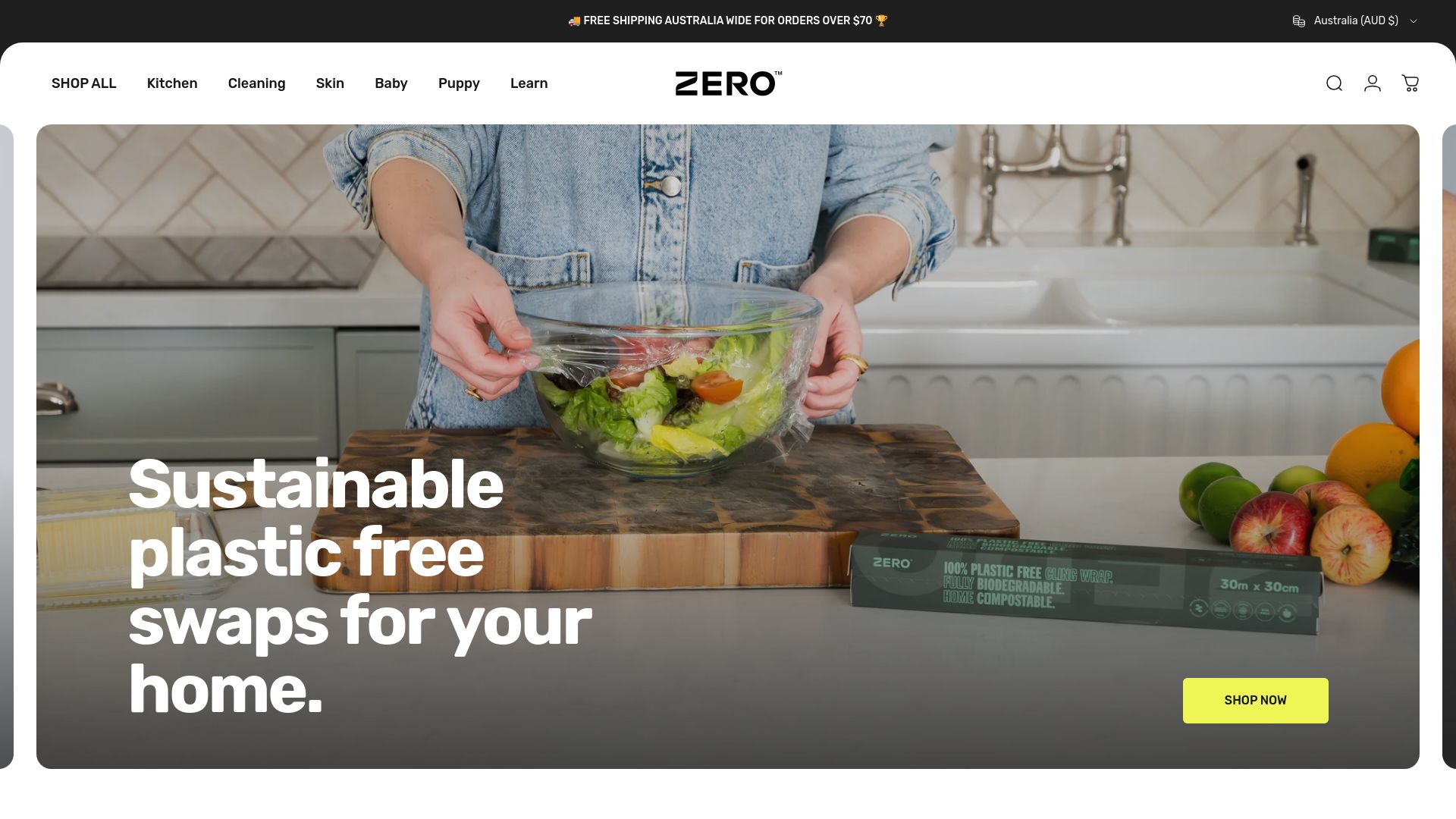
For readers coming from this article, the practical starting point is the cling wrap for occasional single-use needs, paired with resealable bags for lunches and snacks. Both are available directly from The Zero Store, with full product specifications and disposal guidance on each product page. Browse the full plastic-free range at thezerostore.com and make the swap that actually sticks.
Share:
Ziploc alternatives for everyday eco-friendly use
Flushable wipes alternatives for eco households