
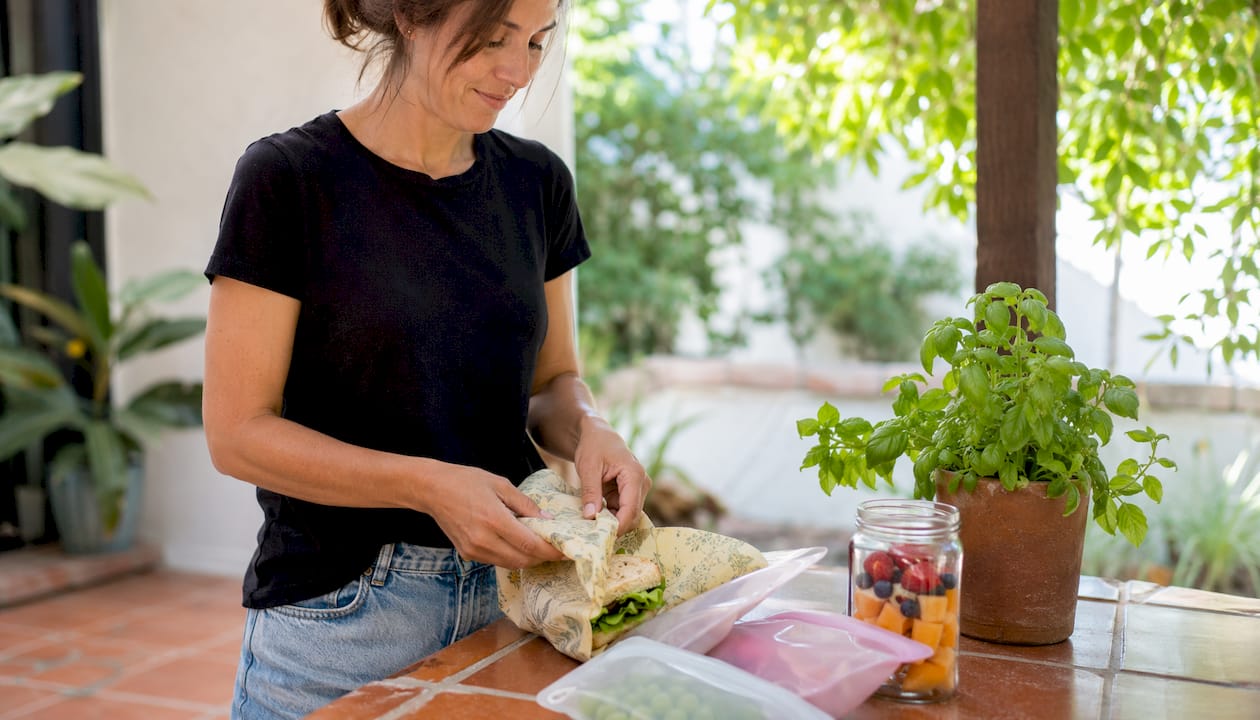
The best swaps for single-use Ziploc bags are silicone resealable bags, beeswax or plant-wax wraps, glass or stainless steel containers, and washable cotton pouches. Each material has a clear job: silicone handles liquids and freezer meals, beeswax wraps cover sandwiches and cut fruit, glass or stainless steel suits meal prep and reheating, and cotton pouches keep dry snacks and produce fresh without trapping moisture.
Quick guide — match the alternative to the task:
- Sandwiches and wraps: beeswax or plant-wax wrap, or a cotton sandwich pouch
- Liquids and soups: food-grade silicone bag with a pinch-loc or zip seal
- Freezer storage: high-grade silicone bag or a glass container with a locking lid
- Dry snacks and crisps: breathable cotton or mesh produce bag
- Fruit and veg: washable plastic-free produce bags (cotton or mesh)
Organic cotton pouches and beeswax wraps reduce microplastic exposure during lunch preparation, which matters if you are packing food for children daily. The Zero Store’s resealable food storage bags and produce bags are made from bio-polymers rather than conventional plastic, giving you a practical, low-microplastic option you can order online in the UK.
Table of Contents
- What are the best Ziploc alternatives for daily use?
- Is it safe to freeze or microwave reusable bags?
- How do you clean and maintain reusable food storage?
- How do you choose the right alternative for the task?
- What does the research say about reusable alternatives?
- Key takeaways
- Why the conventional wisdom on reusables misses the point
- Plastic-free resealable bags from The Zero Store
- Useful sources and where to buy in the UK
What are the best Ziploc alternatives for daily use?
Each material below has distinct strengths. The right choice depends on what you are storing, how you plan to clean it, and how long you expect it to last.
Silicone reusable bags
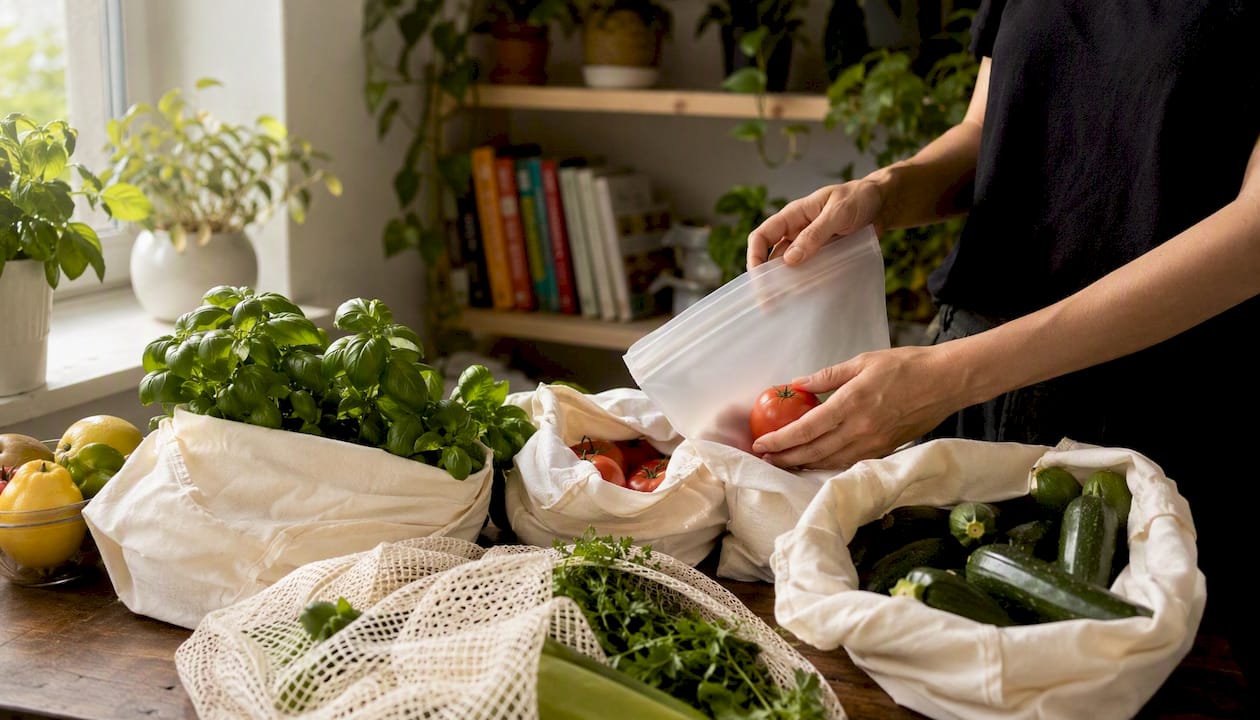
Food-grade silicone bags are the closest like-for-like swap for a standard Ziploc. They seal liquids, go in the freezer, and most are dishwasher-safe. Thicker, platinum-grade silicone bags are heat-resistant enough for sous-vide cooking and microwave reheating, though always check the manufacturer’s temperature rating before you try it.
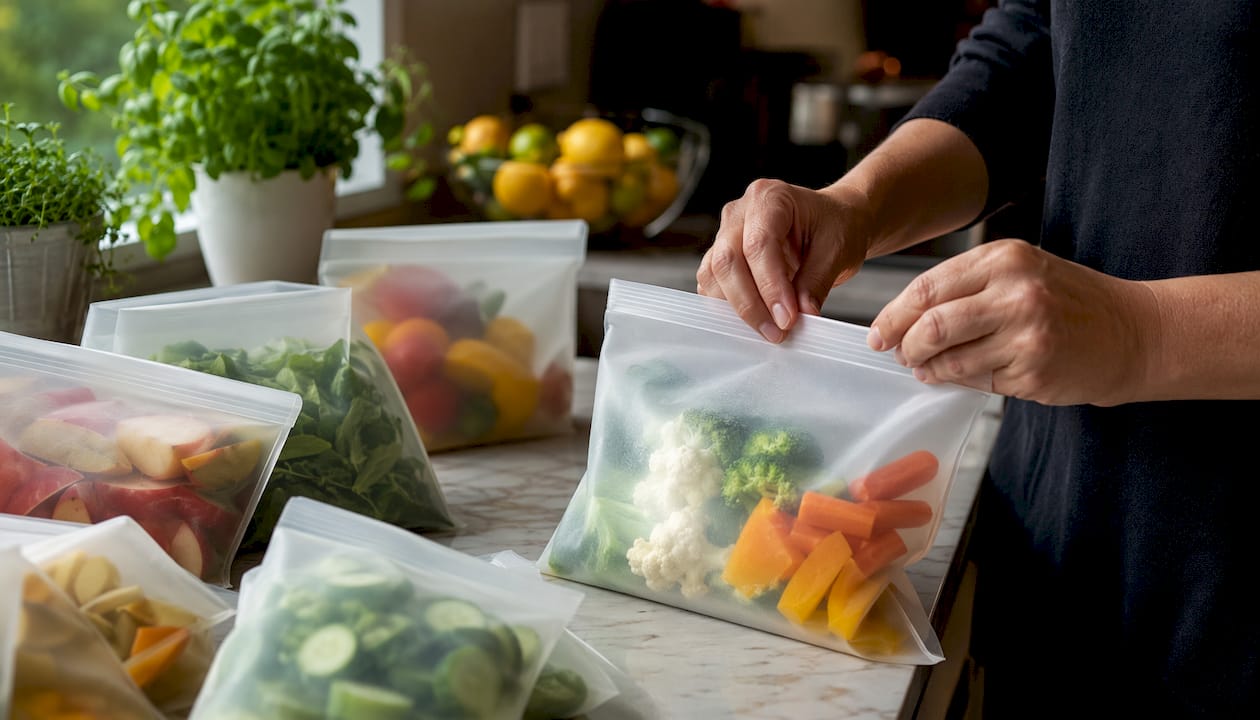
The main drawback is weight: silicone bags are noticeably heavier than a plastic baggie, which matters for packed lunches. They also cost more upfront. That said, a well-made silicone bag can replace hundreds of single-use bags over its lifetime, so the cost-per-use drops sharply with regular use.
Sealing mechanisms vary: pinch-loc seals perform well for liquids but can be fiddly for small children; slider-style zips are easier to operate but may not hold up as well under inversion. Fill a new bag with water and hold it upside down before trusting it with soup or a freezer meal.
Best for: liquids, freezer meals, reheating, sous-vide. Avoid: very young children who struggle with pinch seals.
Beeswax and plant-wax wraps
Beeswax wraps are cotton fabric coated with beeswax, tree resin, and oil. You warm them briefly with your hands and they mould around a bowl, a sandwich, or a wedge of cheese. They are naturally antibacterial and biodegradable, and with proper care they last up to a year of regular use.
The limitations are real: beeswax wraps cannot hold liquids, cannot go near heat, and are not suitable for raw meat. Vegan plant-wax versions (using candelilla or carnauba wax) work the same way and are widely available in UK health food shops and online.
Best for: sandwiches, cut fruit, covering bowls, wrapping cheese. Avoid: liquids, raw meat, anything that needs refrigerating in a sealed bag.
Glass jars and containers with lids
Glass is the most versatile option for home use. It goes from freezer to oven to dishwasher without any material degradation, and it does not absorb odours or stains. Kilner jars and clip-top glass containers are widely available on UK high streets and from supermarkets.
The obvious downside is weight and fragility. Glass is not a sensible choice for packed lunches or children’s school bags. For home meal prep, batch cooking, and fridge storage, though, it is hard to beat.
Best for: meal prep, fridge leftovers, batch cooking, reheating. Avoid: portable use, children’s lunchboxes.
Stainless steel containers
Stainless steel tins and bento-style boxes are lightweight relative to glass, virtually indestructible, and entirely free of plastics. They do not go in the microwave, but they are excellent for packed lunches, picnics, and dry or semi-dry foods. Many UK outdoor and zero-waste retailers stock them.
Best for: packed lunches, snacks, travel, dry and semi-dry foods. Avoid: microwave reheating.
Cotton pouches and produce bags
Breathable cotton is the right choice for crunchy snacks, crackers, and loose produce. Moisture escapes rather than building up, so crisps stay crisp and apples do not sweat. Cotton bags are machine-washable, fully biodegradable, and among the lightest options available.
They are not leakproof and cannot hold liquids. For fruit and veg shopping, The Zero Store’s produce bags are a straightforward plastic-free swap that washes easily and lasts through many market trips.
Best for: dry snacks, crackers, fruit, veg, bread. Avoid: liquids, anything that needs an airtight seal.
IKEA ISTAD bags
For a budget-friendly, accessible option, IKEA ISTAD resealable bags are made from at least 50% renewable material and come in multiple sizes with a slider closure. They are not plastic-free, but they are a step up from standard single-use Ziploc bags and available in most IKEA stores across the UK.
Best for: readers transitioning away from single-use bags who want a familiar format at low cost.
Pro Tip: Match the material to the food: use breathable cotton for crunchy items like crackers and trail mix, and silicone for anything wet, oily, or destined for the freezer. Mixing up the two is the most common reason people find reusable bags disappointing.
Is it safe to freeze or microwave reusable bags?
The short answer: glass and high-grade silicone are generally safe for both freezing and reheating; cotton and beeswax wraps are not.
What is safe in the freezer
Food-grade silicone bags handle freezer temperatures without cracking or degrading. Glass containers with locking lids also freeze well, though you should leave a gap at the top for liquid expansion. Stainless steel is freezer-safe for dry foods, though acidic liquids can affect the interior over time.
Cotton bags and beeswax wraps are not suitable for freezing liquids. A cotton pouch holding dry items like bread rolls can go in the freezer, but it will not create a seal against freezer burn the way silicone does.
Microwave safety
Only use containers explicitly labelled as microwave-safe. Platinum-grade silicone bags typically tolerate microwave reheating; standard silicone or PEVA bags often do not. Glass is microwave-safe. Stainless steel is not. Beeswax wraps will melt.
Sealing and temperature ratings vary between products, so check the label before reheating. Look for BPA-free certification and a stated temperature range (typically up to 200–220°C for platinum silicone).
Microplastics and soft plastics
Freezing conventional soft plastic bags can cause the plastic to become brittle and shed microplastic particles into food. This is one of the clearest practical reasons to switch. Soft plastics are also frequently excluded from kerbside recycling in the UK because they jam sorting machinery, meaning most used Ziploc-style bags end up in general waste.
Most UK councils do not accept soft plastics in kerbside recycling. Dedicated in-store collection points at major supermarkets are currently the main disposal route for soft plastics that cannot be avoided.
Pro Tip: Before buying any silicone bag for freezer or microwave use, check for two things: a stated temperature range on the packaging, and a food-grade or platinum-silicone certification. A bag labelled simply “silicone” without a temperature rating is not a reliable guide to its heat tolerance.
How do you clean and maintain reusable food storage?
Cleaning habits determine how long these alternatives last. A silicone bag that is never properly dried will develop mould; a beeswax wrap put in the dishwasher is ruined in one cycle.
Silicone bags
- Turn the bag inside out after emptying.
- Wash in warm soapy water or place on the top rack of the dishwasher (check the manufacturer’s guidance first).
- For stubborn odours, soak in a solution of warm water and bicarbonate of soda for 30 minutes.
- For turmeric or tomato staining, leave the bag in direct sunlight for a few hours after washing — UV exposure fades most stains naturally.
- Air-dry completely before storing. Never store damp.
Replace when the seal no longer holds water or when the silicone shows visible tears or discolouration.
Glass containers
- Wash in the dishwasher or by hand with hot soapy water.
- Check rubber or silicone lid seals separately — these can harbour mould if not dried properly.
- Inspect lids for cracks or warping after dishwasher cycles; a warped lid will not seal.
Stainless steel
- Hand-wash with warm soapy water; most stainless steel containers are not dishwasher-safe for the lid components.
- Dry immediately to prevent water spots.
- For persistent odours, fill with warm water and a tablespoon of bicarbonate of soda, leave for an hour, then rinse.
Cotton pouches and produce bags
- Machine-wash in cold water on a gentle cycle.
- Air-dry or tumble-dry on a low heat setting.
- Check for fraying seams after washing; a frayed seam on a produce bag means it is time to replace it.
Beeswax and plant-wax wraps
- Rinse in cool water with a small amount of mild washing-up liquid. Never use hot water — it melts the wax.
- Air-dry flat or hanging; do not use a tumble dryer or dishwasher.
- If the wrap loses its stickiness, you can refresh it briefly in a low oven (around 60–70°C) on a sheet of baking paper to redistribute the wax.
Replace beeswax wraps when the wax coating becomes thin, cracked, or no longer moulds to surfaces.
Pro Tip: The single most common mistake with beeswax wraps is washing them in hot water. Even a brief rinse under a hot tap will strip the wax coating. Keep a separate cool-water bowl near the sink during the first few weeks until the habit sticks.
How do you choose the right alternative for the task?
A quick checklist before you buy:
- What are you storing? Liquid, semi-liquid, dry, or produce? Liquids need a leakproof seal (silicone or glass). Dry snacks need breathability (cotton).
- What temperature? Freezer, fridge, room temperature, or microwave? Only glass and rated silicone handle the full range.
- Who is using it? Children struggle with pinch-loc silicone seals; slider zips or cotton drawstring bags are easier for small hands.
- How often will you wash it? If you want to throw it in the dishwasher without thinking, glass or dishwasher-rated silicone is the right choice. Beeswax wraps and stainless steel lids need hand-washing.
- How portable does it need to be? Stainless steel and cotton are lightest for packed lunches. Glass is heavy and fragile on the move.
- What size do you need? Sandwich bags, snack bags, and litre-plus freezer bags are different products. The Zero Store’s resealable bag range covers multiple sizes if you want a plastic-free option across the board.
Buying questions worth asking:
- What is the material composition? (Look for food-grade or platinum silicone, GOTS-certified organic cotton, or certified bio-polymer.)
- What is the stated temperature range?
- Is the seal leakproof when inverted? (Test with water before use.)
- Is it dishwasher-safe, and which rack?
- Does it come with a guarantee or replacement policy?
- Does it carry a BPA-free or relevant food-safety certification?
Cost-per-use reasoning: a pack of 20 single-use Ziploc bags costs roughly £1.50–£2.00 and each bag is typically used once. A quality silicone bag costs more upfront but, used three times a week, breaks even against single-use bags within a few months. The sustainability benefit compounds the longer you use it.
For meal prep and packed lunches, a set of two or three silicone bags plus a couple of cotton pouches covers most daily needs without any single-use plastic.
What does the research say about reusable alternatives?
The sustainability case for reusables is real, but it comes with a condition: the item has to be used consistently and for its full lifespan.
Durable silicone can justify its production footprint when it replaces many single-use bags over time. A silicone bag used regularly for two or three years offsets its manufacturing impact many times over compared to the single-use bags it replaces. The same logic applies to glass and stainless steel. Cotton bags have a lower production impact but need to be washed efficiently to keep their environmental footprint low.
Soft-plastic recycling in the UK remains limited. Most council kerbside programmes exclude soft plastics because they jam sorting machinery and cause contamination in mixed recycling streams. Supermarket in-store collection points (such as those run by major UK grocery chains) are the practical route for disposing of soft plastics that cannot be avoided. Switching to reusables removes the problem at source.
Organic cotton and beeswax wraps reduce microplastic exposure for everyday lunch preparation, which is a meaningful benefit for households packing food for children. Breathable fabric also keeps crunchy foods in better condition than sealed plastic, so the swap is practical as well as environmental.
Independent testing of reusable bag models shows real differences in leakproofness and stability. Standing-design bags are easier to fill without spillage. Some thicker silicone bags leaked when inverted in tests, which reinforces the case for trialling any new bag with water before relying on it for liquids or freezer meals.
The broader picture for eco-friendly household swaps is moving in the same direction: reducing single-use plastics across cleaning, food storage, and waste disposal is increasingly mainstream, and the eco-friendly home trends driving that shift show no sign of reversing.
Key takeaways
Reusable alternatives to single-use Ziploc bags work best when you match the material to the food, prioritise durability, and commit to proper cleaning so each item reaches its full lifespan.
| Point | Details |
|---|---|
| Match material to food | Use silicone for liquids and freezing; cotton for dry snacks; glass or stainless for meal prep and reheating. |
| Test seals before use | Fill any new silicone bag with water and invert it before trusting it with liquids or freezer meals. |
| Soft plastics and recycling | Most UK kerbside programmes exclude soft plastics; switching to reusables removes the disposal problem entirely. |
| Lifespan drives sustainability | A silicone or glass container only beats single-use bags environmentally when used consistently for its full lifespan. |
| The Zero Store option | The Zero Store’s resealable food storage bags and produce bags offer a plastic-free, bio-polymer alternative available to UK buyers online. |
Why the conventional wisdom on reusables misses the point
Most guides to Ziploc alternatives spend their energy on the upfront swap: buy silicone, ditch plastic, done. What they underplay is the maintenance half of the equation. A silicone bag that sits at the back of a drawer because the seal is fiddly, or a beeswax wrap that gets ruined in the first dishwasher cycle, does not replace a single-use bag. It just becomes another piece of clutter with a sustainability story attached.
The honest version of this advice is less tidy: the right alternative depends on your actual habits, not your aspirational ones. If you genuinely will not hand-wash a bag after every use, beeswax wraps are not for you. If your household includes young children, a pinch-loc silicone seal will be abandoned within a week. Matching the product to the person matters as much as matching it to the food.
The other thing most guides skip is the recycling reality. Soft plastics are not going into your blue bin and being sorted responsibly. They are going to landfill or incineration via the general waste stream, because kerbside soft-plastic recycling is not available in most UK areas. That is not a minor footnote; it is the core reason switching to reusables has a concrete environmental benefit rather than just a symbolic one.
The Zero Store’s approach of using certified bio-polymers and publishing material certifications openly is worth noting here. Transparency about what a product is made of, and what happens to it at end of life, is exactly what the category needs more of.
Plastic-free resealable bags from The Zero Store
Single-use Ziploc bags are convenient, but the alternatives covered in this guide are more practical than most people expect once you have the right product for the right job.
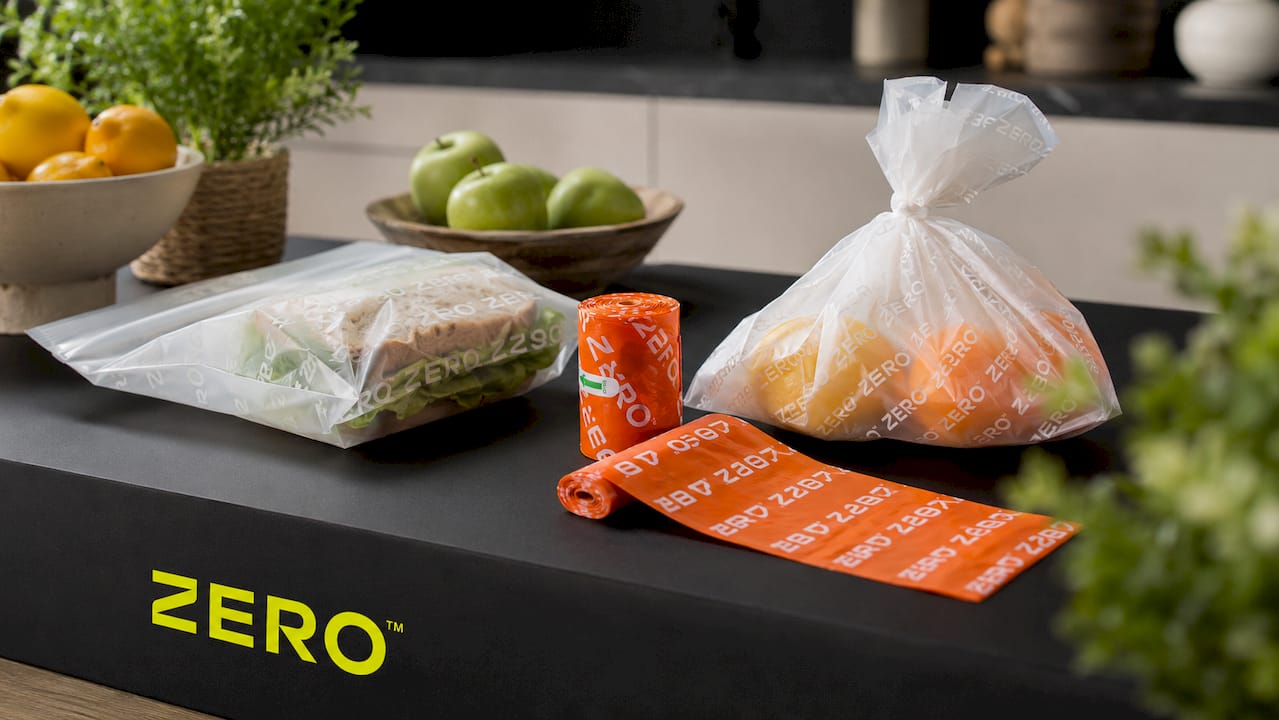
The Zero Store’s resealable food storage bags are made from bio-polymers rather than conventional plastic, meaning no microplastics and no PVC or BPA. They seal securely for snacks, sandwiches, and everyday food storage, and they come with clear care instructions so they last. The plastic-free produce bags are a washable, reusable swap for the single-use bags you reach for at the supermarket. For households managing nappy disposal, the nappy waste bags extend the same plastic-free approach to waste management.
Every product comes with material certifications and full ingredient transparency, so you know exactly what you are buying. Browse the full range and find the right size for your household at The Zero Store.
Useful sources and where to buy in the UK
- The Zero Store resealable food storage bags — product page with features, care notes, and size options for a plastic-free resealable alternative.
- The Zero Store plastic-free produce bags — washable cotton-style bags for fruit, veg, and dry goods; includes care guidance.
- The Zero Store plastic-free cling wrap — home-compostable cling-wrap alternative made from PLA/PBAT bio-polymers; useful for readers replacing film wrap as well as bags.
- Sustainable Jungle: eco-friendly alternatives to Ziploc bags — covers lifecycle trade-offs, material comparisons, and soft-plastic recycling guidance.
- The Filtery: reusable alternatives to Ziploc bags — focuses on non-toxic materials including organic cotton and beeswax wraps; useful for microplastic-reduction context.
- Serious Eats: best reusable food storage bags — independent testing of leakproofness, standing design, and dishwasher safety across reusable bag models.
- The Spruce Eats: best reusable snack bags — tested guidance on sealing mechanisms, temperature ratings, and matching material to food type.
- IKEA ISTAD resealable bags — a budget, high-street option made from at least 50% renewable material; available in UK IKEA stores in multiple sizes.
- Supermarket soft-plastic collection points — major UK supermarkets including Tesco, Sainsbury’s, and Waitrose operate in-store soft-plastic drop-off points for bags and film that cannot go in kerbside recycling. Check your nearest store’s customer service area.
Share:
Soft plastics recycling Australia: what you need to know
Best compostable cling wrap: UK buyer's guide 2026