
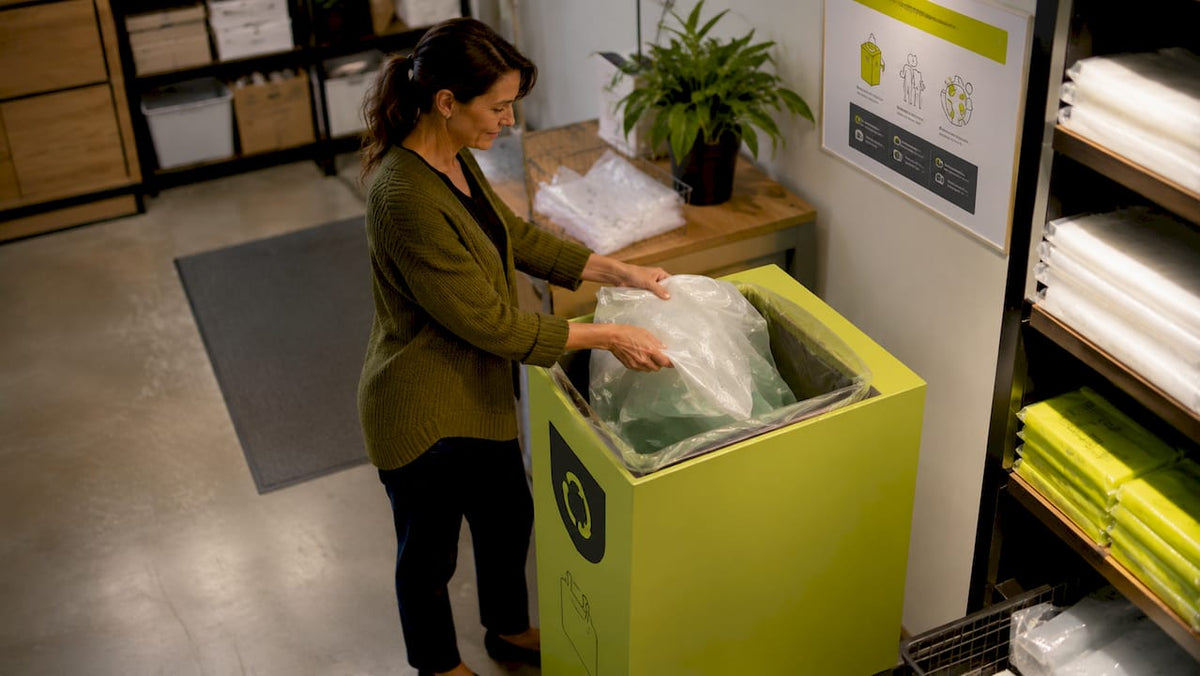
Yes, you can recycle soft plastics in Australia today — but the system has real limits, and how you participate matters enormously. The single most useful thing you can do right now is locate your nearest approved drop-off point (a supermarket return-to-store bin or a council kerbside trial) and prepare your items correctly before you go. A June 2026 industry update confirmed that processing capacity has grown significantly, but consumer participation is now the primary bottleneck — the infrastructure exists, and it needs clean material to fill it.
What you need to know upfront:
- Soft plastics recycling in Australia operates through Soft Plastics Stewardship Australia (SPSA), supermarket return-to-store points, and council kerbside trials.
- Council pilots such as those in Ballarat and Macedon Ranges require council-supplied orange bags — using any other bag risks the whole batch going to landfill.
- Processing capacity now exceeds 20,000 tonnes annually, but Australia generates a large quantity of soft plastics per year — so substitution and avoidance remain the higher-impact household actions.
Pro Tip: Before your next supermarket run, check the SPSA website or your council’s waste page to confirm which collection options are active in your area.
Table of Contents
- What counts as soft plastics?
- How soft plastics recycling works in Australia right now
- Where can you drop off soft plastics near you?
- How to prepare soft plastics for collection
- Why some collections still end up in landfill
- Alternatives that beat recycling: what to switch to now
- What do current schemes cost, and when will they expand?
- How to spot greenwashing and verify recycling claims
- Key takeaways
- Prevention is the part the recycling conversation keeps skipping
- Plastic-free alternatives available from The Zero Store today
- Useful sources and further reading
What counts as soft plastics?
The simplest test: if you can scrunch it into a ball and it stays scrunched, it is almost certainly a soft plastic. Accepted items at most collection points include:
- Bread bags and bread-bag clips removed
- Cereal box liners
- Produce bags (the thin ones from the supermarket fruit and veg aisle)
- Chip and confectionery wrappers
- Cling film and stretch wrap
- Resealable ziplock bags (remove any rigid spout or zip-strip where required)
- Shopping bags and carry bags
- Frozen food bags
Common exclusions include food-contaminated film (even a light grease residue can contaminate a whole batch), laminated multi-material pouches without a clear “Return to store” Australian Recycling Label (ARL), rigid plastics of any kind, and items with metal clips still attached. When buying compostable alternatives, look for AS 4736 (industrial compostable) or AS 5810 (home compostable) certification marks — these are the Australian Standards that confirm a product will actually break down as claimed.
How soft plastics recycling works in Australia right now
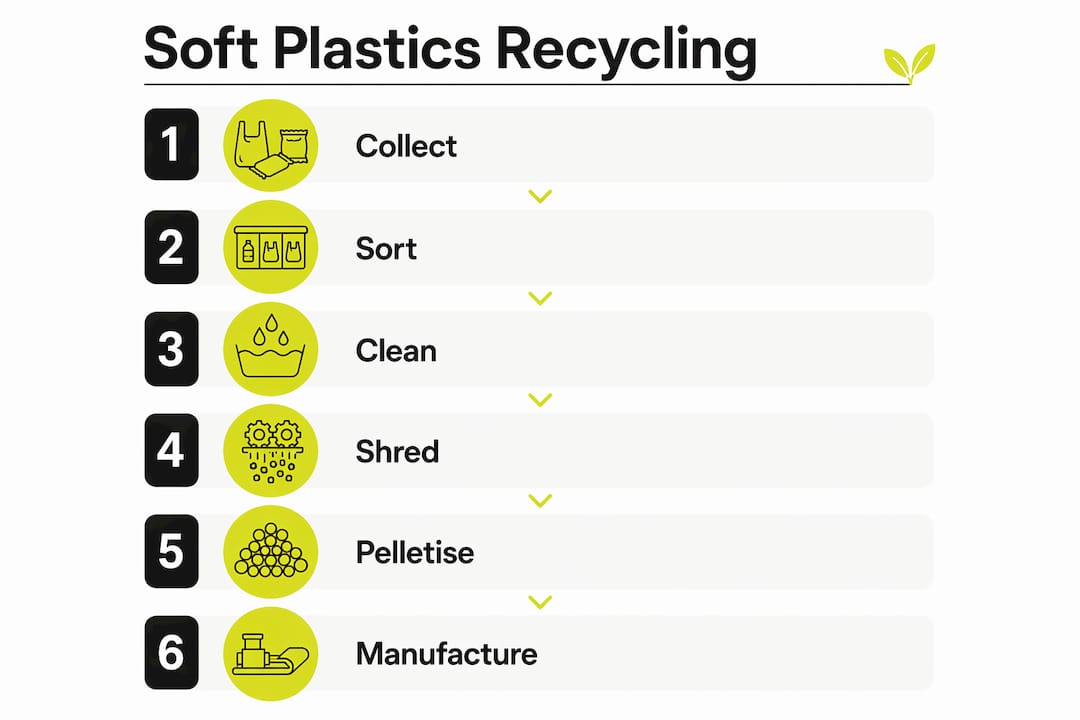
Collected soft plastics travel from drop-off points to sorting facilities, where optical sorters, magnets, and washing stages remove contaminants before the material is extruded into flakes and pellets for reuse. That is the end-to-end flow in brief — but the detail matters.
SPSA now coordinates the stewardship model that replaced the collapsed REDcycle programme. REDcycle peaked at less than 2% of market-placed soft plastics after a decade of operation, and its failure in 2022 left tonnes stockpiled in warehouses. The current system is more structured: SPSA partners can process over 20,000 tonnes annually, with a single SPEC facility with substantial processing capacity and plans for expansion.
Capacity vs generation: SPSA partners process a substantial portion of soft plastics per year. Australia generates a large amount annually — meaning current infrastructure handles only a small fraction of what is placed on the market, since over 20,000 tonnes can be processed each year while an estimated 300,000 tonnes are generated annually.
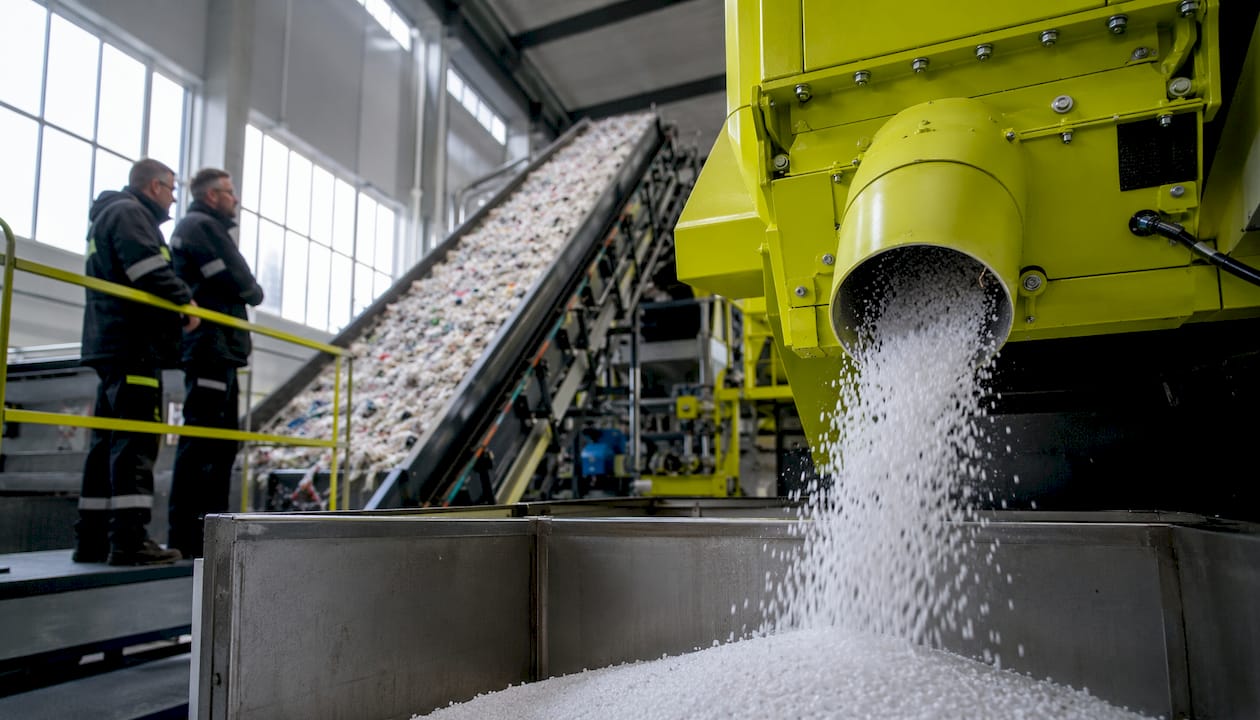
Once processed into pellets, the material goes to manufacturers making products such as buckets, park benches, and — in early trials — bottles. Licella is also trialling advanced chemical recycling that converts mixed plastics back to oil for remanufacture into higher-value products. Mechanical recycling currently yields non-food-grade outputs in most cases, so the circularity is real but limited.
Where can you drop off soft plastics near you?
The most practical options for most Australians are supermarket return-to-store bins and council kerbside trials. Here is how to find and use each:
- Supermarket bins: Major supermarkets participate in SPSA’s return-to-store network. Check the SPSA website for a store finder, or look for collection bins near the entrance of participating stores.
- Council kerbside trials: Pilots in areas including Ballarat and Macedon Ranges allow residents to place soft plastics in council-supplied orange bags inside their yellow-lidded recycling bin. The Macedon Ranges trial expanded shire-wide from July 2024.
- Resource recovery centres: Some councils accept soft plastics at their local transfer stations or resource recovery centres for residents with larger volumes.
- Council websites and SPSA maps: These are the most reliable sources for current, location-specific information — programmes change, and a bin that was active six months ago may have moved or closed.
Pro Tip: In the Macedon Ranges trial, a four-person household typically fills one orange bag in about a month, and multiple bags cover a long period. If your council offers a trial, register early — bag supplies are limited and registration confirms your participation.
How to prepare soft plastics for collection
Getting this right prevents your items from being rejected and protects the whole batch.
- Empty and clean: Remove all food residue. A quick wipe or rinse is enough for most items; they do not need to be spotless, but visible grease or food will cause contamination.
- Dry thoroughly: Wet plastics can cause mould in storage and rejection at the facility.
- Scrunch test: If it does not scrunch, it is probably not soft plastic — do not include it.
- Remove metal clips and rigid parts: Bread-bag clips, zip-strips, and rigid spouts must come off before the item goes in.
- Use only approved bags for kerbside trials: This is the rule most households get wrong. Using a non-approved bag in a council kerbside trial means the entire contents are treated as contamination and sent to landfill — even if every item inside was perfectly prepared.
- Do not mix rigid plastics: They belong in your yellow-lidded bin loose, not bundled with soft plastics.
Pro Tip: Keep a dedicated container in your kitchen — a repurposed bread bag works well — to collect soft plastics between drop-off trips. It makes the cleaning and sorting step much faster.
Why some collections still end up in landfill
Processing capacity and contamination are the two main reasons soft plastics miss recycling. Current infrastructure handles only a fraction of the ~300,000 tonnes generated annually in Australia, so even a perfectly run system would leave most material unrecycled at today’s scale.
Common household mistakes that cause rejection:
- Using a non-approved bag in a council kerbside trial
- Including food-contaminated film or wet items
- Adding laminated pouches or multi-material packaging without ARL labelling
- Mixing rigid plastics, glass, or metal into a soft-plastics batch
There is also a circularity gap worth understanding. Most mechanical recycling of soft plastics produces downcycled outputs — benches, buckets, construction materials — not food-grade packaging. Advanced chemical recycling to oil is being trialled but is not yet at scale. The practical implication: recycling soft plastics is better than landfill, but it is not a closed loop, and it is not a substitute for reducing how many you use in the first place.
Alternatives that beat recycling: what to switch to now
Prevention and substitution reduce your soft-plastic footprint more reliably than recycling alone, and the national policy position reflects this — avoidance and substitution sit above recycling in the waste hierarchy. Analysts note the stewardship model addresses only a fraction of annual soft-plastic output; switching to compostable or reusable alternatives is the most effective household action.
Practical swaps:
- Resealable food storage bags: Replace single-use ziplock and sandwich bags with reusable versions made from bio-polymers. The Zero Store’s resealable bags are designed for repeated use, cutting the volume of soft plastics you generate at the source.
- Plastic-free produce bags: Swap the thin single-use bags from the supermarket produce aisle for lightweight, reusable alternatives. The Zero Store’s Plastic Free Produce Bags (2 Pack) are a direct replacement that you bring to the shops and reuse indefinitely.
- Compostable cling alternatives: Plastic-free cling wrap made from PLA and PBAT offers a home-compostable end of life — look for AS 5810 certification to confirm it will break down in a home compost bin, not just an industrial facility.
- Reusable shopping and produce bags: Any bag you bring from home eliminates a soft plastic at the point of generation.
When evaluating compostable claims, the distinction between AS 4736 (industrial compostable) and AS 5810 (home compostable) is significant. Industrial compostable products require a commercial facility to break down; home compostable items will decompose in a backyard compost bin. Understanding compostable packaging mechanics helps you choose products that actually deliver on their end-of-life promise.
Pro Tip: Check the certification number on any product labelled “compostable” — a genuine AS 5810 or AS 4736 mark includes a licence number you can verify. A vague “eco-friendly” claim with no standard cited is a greenwashing signal.
What do current schemes cost, and when will they expand?
For households, most existing schemes are free at the point of drop-off. Supermarket return-to-store bins are free to use, and council kerbside trials are funded through existing waste levies. Future stewardship levies or retail cost pass-throughs are possible as the system matures, but no confirmed household charge applies to current programmes.
On timeline: SPSA’s return-to-store network has been rebuilding in recent years following REDcycle’s collapse. The June 2026 industry update confirmed capacity has grown substantially, with the SPEC facility’s planned upgrade representing a meaningful step. The constraint now is clean material supply, not processing slots — which means household participation today directly shapes whether expanded programmes are viable.
Watch for new council registrations, updated store signage at supermarkets, and government circularity targets under the National Plastics Plan as markers of the next phase.
How to spot greenwashing and verify recycling claims
Check for these signals before trusting a collection point or a compostable product claim:
- SPSA or council endorsement: Legitimate collection points are listed on the SPSA website or your council’s waste pages — not just on a retailer’s own marketing materials.
- ARL “Return to store” symbol: The Australian Recycling Label system provides item-specific guidance; look for the explicit “Return to store” instruction, not a generic recycling triangle.
- Approved bags for kerbside trials: If a council trial is running in your area, the orange collection bag itself is the verification signal — no bag, no participation.
- AS certification numbers for compostable products: AS 4736 or AS 5810 with a verifiable licence number confirms the claim. No number means no independent verification.
- Accepted item lists: Every legitimate scheme publishes one. If a collection point cannot tell you what it accepts, treat it with scepticism.
A practical habit: photograph the bagging instructions or product certification label when you are unsure. It takes two seconds and gives you something concrete to check against the scheme’s official guidance.
Key takeaways
Australia’s soft plastics recycling system is real and growing, but it handles a small fraction of annual generation — making substitution and correct participation equally important household actions.
| Point | Details |
|---|---|
| Use approved collection points | Supermarket return-to-store bins and council kerbside trials are the main options; check SPSA or your council’s website for current locations. |
| Prepare items correctly | Clean, dry, and use only council-supplied bags for kerbside trials — a non-approved bag sends the whole batch to landfill. |
| Capacity vs generation gap | SPSA partners process over 20,000 tonnes per year; about 300,000 tonnes of soft plastics are generated annually in Australia, so recycling alone is not sufficient. |
| Verify compostable claims | Look for AS 4736 (industrial) or AS 5810 (home compostable) certification numbers — not just “eco-friendly” labelling. |
| The Zero Store alternatives | Resealable food storage bags and plastic-free produce bags from The Zero Store replace high-use soft plastics at the source. |
Prevention is the part the recycling conversation keeps skipping
The recycling infrastructure story is genuinely encouraging after REDcycle’s collapse. Capacity has significantly increased, council trials are expanding, and the SPSA model is more rigorous than what came before. But the framing of “recycle your soft plastics” as the primary household action quietly lets producers off the hook and places the burden on consumers to manage a problem they did not design.
The more honest framing: recycling is the last resort, not the goal. A resealable bag you wash and reuse fifty times generates no recycling problem. A produce bag you bring to the shops eliminates a soft plastic before it enters the waste stream. The households that will have the lowest soft-plastic footprint in five years are not the ones who become expert recyclers — they are the ones who stopped generating the material in the first place.
That does not mean ignoring the collection system. Participating correctly matters, because clean material supply is now the binding constraint. But the two actions are complementary, not alternatives: reduce what you use, and recycle what you cannot avoid. Treating recycling as the primary solution is how we ended up with 300,000 tonnes a year and a system that processes only a small share of that total.
Plastic-free alternatives available from The Zero Store today
If the recycling system feels like a workaround for a problem you would rather not have, that instinct is right. The Zero Store offers a direct alternative: plastic-free household essentials made from certified bio-polymers that replace the soft plastics most households generate every week.
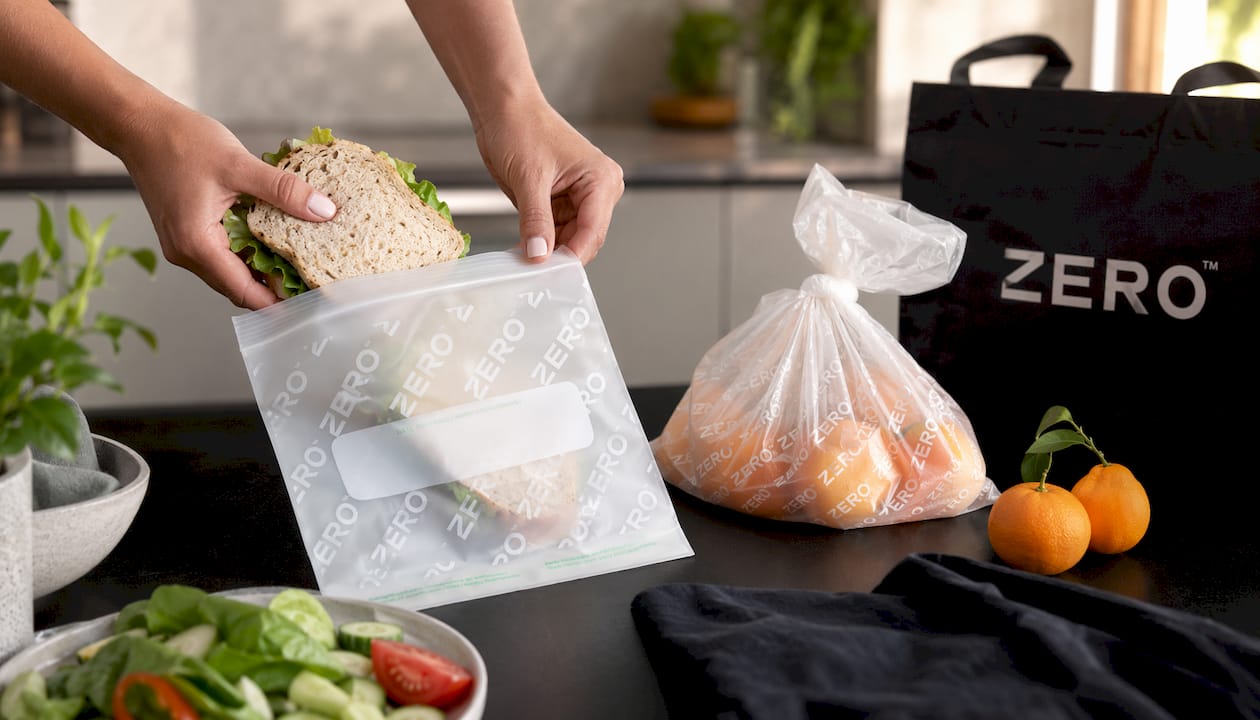
The resealable food storage bags replace single-use ziplock and snack bags with a reusable option built from PLA and PBAT — wash them, reuse them, and stop adding to the soft-plastics stream entirely. The Plastic Free Produce Bags (2 Pack) are a direct swap for the thin single-use bags in the supermarket produce aisle; bring them in your shopping bag and reuse them indefinitely. Both products carry transparent material and certification information, so you know exactly what you are buying and how it ends its life. Browse the full kitchen collection to find the right fit for your household, or visit The Zero Store to explore the complete plastic-free range.
Useful sources and further reading
These are the primary sources to consult for official guidance, current programme maps, and deeper reading on Australia’s soft plastics system.
| Source | What it covers |
|---|---|
| SPSA (spsa.au) | Programme overview, store finder, accepted items, and industry stewardship model |
| ABC News — how soft plastics recycling works | End-to-end processing explanation, SPEC facility capacity, and recycled product end uses |
| ABC News — June 2026 industry update | Capacity growth figures and consumer participation as the current constraint |
| Macedon Ranges Shire Council — kerbside trial | Orange bag instructions, fill-rate estimates, and shire-wide rollout details |
| Ballarat City Council — pilot programme | Contamination rules, approved bag requirements, and local collection guidance |
| National Plastics Plan — DCCEEW | Government policy on avoidance, substitution, and recycling targets |
| The Guardian — new SPSA scheme explainer | Independent analysis of the stewardship model and household cost implications |
Share:
Compostable sandwich bags: what UK shoppers need to know
Ziploc alternatives for everyday eco-friendly use