

Compostable items meet specific standards and break down into safe compost within a defined timeframe under set conditions. Biodegradable is a broader, looser claim that simply means biological breakdown will eventually occur, without specifying when, where, or how safely. For UK consumers, the practical upshot is this: always check for a recognised certification before deciding how to dispose of something.
Here is what to look for on packaging:
- EN 13432 — the European standard for industrially compostable packaging; the gold benchmark for compostable claims in the UK
- OK Compost HOME (TÜV Austria) — confirms a product will break down in a home composter at ambient temperatures
- BPI certification — a North American standard, but signals the product has been independently tested for compostability
- ASA guidance — the Advertising Standards Authority has ruled that unqualified ‘biodegradable’ claims can mislead consumers. If a label says only ‘biodegradable’ with no certification, treat it with caution
- WRAP guidance — the UK’s Waste and Resources Action Programme publishes advice on which materials local councils accept; check your council’s food-waste collection rules before putting anything in the green bin
Thezerostore’s plastic-free household products carry clear material and certification information, which is exactly the kind of transparency the labels below are designed to reward.
Table of Contents
- What does ‘biodegradable’ actually mean?
- What does ‘compostable’ mean, and does it work at home?
- How do compostable and biodegradable compare?
- Which certifications can you actually trust?
- Where should you put compostable and biodegradable items in the UK?
- What the research actually shows about real-world performance
- How to choose compostable or biodegradable products without being misled
- Key takeaways
- Why labels and infrastructure matter more than clever materials
- Thezerostore’s certified plastic-free alternatives
- Useful sources and further reading
What does ‘biodegradable’ actually mean?
Biodegradable means a material can be broken down by bacteria, fungi, or other microorganisms into carbon dioxide, water, and biomass. That sounds reassuring. The catch is that the term carries no legal timeframe, no required environment, and no minimum standard in the UK or internationally.
“Biodegradability is a broader concept without a universal timeframe or set of conditions — it does not guarantee breakdown in any particular environment.” — Ellen MacArthur Foundation
Whether something biodegrades depends almost entirely on where it ends up. A starch-based bag may break down in a managed compost facility within weeks. The same bag in a landfill, starved of oxygen and microbial activity, could persist for years and release methane as it slowly degrades. In the ocean, it may fragment into microplastics rather than fully decompose.
The Advertising Standards Authority has made clear that unqualified ‘biodegradable’ claims on packaging can be considered misleading, because they imply a disposal outcome the product cannot reliably deliver. Materials commonly labelled biodegradable include some starch blends, certain bioplastics, and natural fibres such as cotton or jute. Their real-world performance varies enormously depending on microbial conditions, temperature, moisture, and oxygen levels.

What does ‘compostable’ mean, and does it work at home?
Compostable is a more specific claim. A compostable material must disintegrate into non-toxic compost within a defined timeframe under defined conditions. The key word is conditions, because those conditions differ significantly between industrial facilities and a garden compost bin.
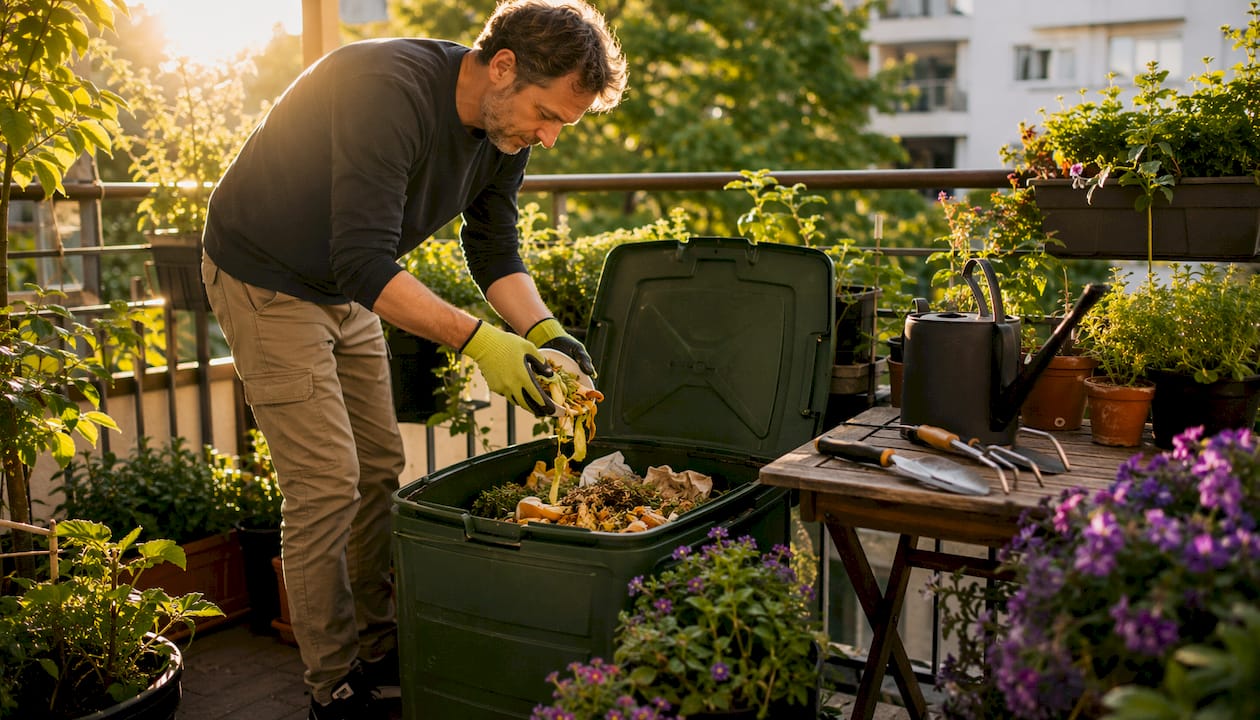
Industrial composting operates at thermophilic temperatures, typically around 58 °C, with controlled moisture and microbial activity. Standards like EN 13432 require 90% biodegradation within 180 days at those temperatures. PLA (polylactic acid), one of the most common bioplastics used in compostable packaging, almost always requires these conditions. Put a PLA product in your home composter and it is unlikely to break down meaningfully. The EEA confirms that PLA and many compostable polymers perform poorly at ambient temperatures.
Home composting is a different matter. The OK Compost HOME certification (TÜV Austria) is the standard to look for. It tests breakdown at lower temperatures, closer to what a garden bin actually reaches. Products carrying this logo have been verified to disintegrate in a home composter within a reasonable timeframe without leaving harmful residues.
Common items marketed as compostable include food-waste bin liners, some cling wraps, certain coffee pods, and resealable food bags. Whether they belong in your home composter or your council’s food-waste collection depends entirely on which certification they carry.
Pro Tip: If a product says ‘compostable’ but shows no logo and does not specify ‘home compostable’, treat it as industrially compostable at best. Without a recognised mark, you cannot verify the claim.
Materials typically accepted in home composters (with OK Compost HOME certification):
- Certified home-compostable food bags and bin liners
- Some starch-based packaging films
- Certified home-compostable cling wraps
Materials that usually require industrial composting:
- PLA cups, cutlery, and trays
- PBAT-based films without a home-compost certification
- Most certified compostable coffee pods
How do compostable and biodegradable compare?
The relationship is straightforward: all compostable materials are biodegradable, but not all biodegradable materials are compostable. Compostable is the subset with rules attached.
| Dimension | Compostable | Biodegradable |
|---|---|---|
| Definition | Breaks down into safe compost within a set timeframe under set conditions | Breaks down biologically eventually; no universal timeframe or standard |
| Required environment | Industrial (58 °C) or home composter (OK Compost HOME) | Varies: soil, water, compost, landfill — often unspecified |
| Typical timeframe | 90% biodegradation within 180 days at 58 °C in industrial composting | Months to decades depending on environment |
| Certification to trust | EN 13432, OK Compost HOME, BPI | No single international standard exists |
| Common examples | PLA trays (industrial), certified food bags (home) | Starch blends, natural fibres, some bioplastics |
| UK disposal route | Home composter (if OK Compost HOME) or council food-waste collection | General waste unless certified; check council guidance |
| Environmental risks | Microplastics if composted incorrectly; methane if landfilled | Fragmentation, slow breakdown, methane in landfill |
The single most important point: a ‘biodegradable’ label on its own tells you almost nothing useful about disposal. Check for a certification logo and match the product to the right waste stream.
Which certifications can you actually trust?
Certifications are the only reliable shortcut. Here is what each one means in practice:
- EN 13432 — the European standard for industrially compostable packaging. Requires disintegration within 12 weeks and 90% biodegradation within 180 days at 58 °C, with no toxic residues in the resulting compost. This is the benchmark for any packaging sold in the UK claiming industrial compostability.
- OK Compost (TÜV Austria) — confirms industrial compostability, aligned with EN 13432. The logo is a green seedling on a blue background.
- OK Compost HOME (TÜV Austria) — the stricter consumer-facing standard. Tests breakdown at ambient temperatures in a real home composter. If you want to put something in your garden bin, this is the logo to look for.
- BPI (Biodegradable Products Institute) — a North American certification based on ASTM D6400 and D6868. Not a UK standard, but it signals independent third-party testing and is worth recognising on imported products.
- PAS 100 — a British Standards Institution specification for compost quality from municipal and industrial sources. It does not certify individual products, but compost produced under PAS 100 conditions is what certified compostable products are designed to feed into.
- WRAP guidance — WRAP works with local authorities and the composting industry to align collection infrastructure with material standards. Their guidance is the practical bridge between certification and what your council actually accepts.
- ASA rules on environmental claims — the Advertising Standards Authority requires that environmental claims be substantiated, accurate, and not misleading. An unqualified ‘biodegradable’ claim on packaging has been found to breach these rules.
PLA and PBAT are the two biopolymers you will encounter most often on product labels. PLA is typically only industrially compostable. PBAT blends vary, but most also require thermophilic conditions to reach meaningful biodegradation levels, as MDPI research confirms. Neither is reliably home-compostable without an explicit OK Compost HOME mark.
Pro Tip: Search the TÜV Austria OK Compost database online to verify whether a specific product or material holds a current certification. Logos can be misused; the database is the authoritative check.
Where should you put compostable and biodegradable items in the UK?
Disposal in the UK depends on what your local council collects, which varies considerably. Here is a practical sequence to follow:
- Check the label first. Does it say ‘home compostable’ and carry the OK Compost HOME logo? If yes, your garden compost bin is the right destination.
- If it is industrially compostable only, check whether your council’s food-waste or green-waste collection accepts certified compostable packaging. Many do not, because contamination from non-certified items has made councils cautious. Visit your council’s website and search for ‘compostable packaging’ or ‘food waste collection guidance’.
- If your council does not accept it, the item goes in general waste. Putting industrially compostable plastics into recycling contaminates the stream. Putting them in home compost means they are unlikely to break down properly.
- For items labelled only ‘biodegradable’, with no certification, treat them as conventional plastic for disposal purposes. General waste is the safest option to avoid contaminating compost or recycling.
- Use WRAP’s guidance at wrap.ngo to find up-to-date information on what local authorities accept and how composting infrastructure is developing across the UK.
In a home composter, certified home-compostable items typically break down within a few months under reasonable conditions. Industrial facilities achieve the same in several months at controlled temperatures. In landfill, even certified compostable materials break down very slowly in the absence of oxygen, and the process produces methane, a potent greenhouse gas.
Keeping your compost and recycling streams separate is easier with dedicated bins. Practical household bin organisation can make a real difference to whether the right materials reach the right facilities.
Pro Tip: On your council’s website, search for ‘food waste collections’ or ‘caddy liners accepted’ to find out exactly which bin liners and compostable packaging your local service will take. The answer varies by borough.
What the research actually shows about real-world performance
The gap between what a label promises and what happens in practice is wider than most consumers expect. Compost Connect and AIMPLAS both highlight that consumer misunderstanding is widespread: many people assume ‘biodegradable’ means an item will decompose harmlessly wherever it ends up.
It does not. Biodegradation is environment-dependent: an item that breaks down in an industrial composter may persist for years in soil or water, or fragment into microplastics. Even certified compostable plastics can leave residual fragments if they end up in the wrong conditions. StopWaste’s fact sheet on compostable plastics notes that certification does not guarantee breakdown in home or marine settings.
The 90% biodegradation within 180 days at 58 °C benchmark for industrial composting is a laboratory standard. Real industrial facilities approximate those conditions, but home composters rarely sustain 58 °C for long enough to trigger the same process in PLA or PBAT materials.
Starch-based polymers and PHAs (polyhydroxyalkanoates) generally perform better in natural environments than PLA or PBAT blends, according to MDPI’s review of bioplastic biodegradability. If home compostability matters to you, PHA-based or starch-based products with an OK Compost HOME mark are a more reliable choice than PLA-based alternatives.
Pro Tip: If a product carries no certification and is labelled only ‘biodegradable’, dispose of it as general waste. Putting it in compost or recycling risks contaminating those streams with material that will not break down as expected.
How to choose compostable or biodegradable products without being misled
A short checklist for shopping in stores or online:
- Prefer reusable first. A reusable silicone bag or beeswax wrap avoids the end-of-life question entirely.
- If single-use is unavoidable, look for EN 13432 or OK Compost HOME on the packaging, not just the word ‘compostable’.
- Confirm your disposal route before you buy. A product certified to EN 13432 is only useful if your council accepts it in food-waste collections.
- Avoid mixed-material laminates. A bag that is part paper, part plastic, part biopolymer is rarely accepted in any composting stream.
- Ignore vague claims. ‘Eco’, ‘green’, ‘planet-friendly’, and unqualified ‘biodegradable’ are marketing language, not disposal instructions.
When evaluating a specific product, such as a compostable cling wrap or resealable food bag, look for:
- The specific biopolymer listed (PLA, PBAT, starch blend, PHA)
- Whether the certification logo is present and which standard it references
- Whether the product page states ‘home compostable’ or ‘industrially compostable’
- Whether the brand links to a certification database entry or third-party test report
A product page that lists only ‘biodegradable’ or ‘eco-friendly’ with no standard cited is a warning sign. Thezerostore’s resealable food bags and home-compostable cling wrap include material and certification details on the product page, which is the baseline you should expect from any credible supplier.
Key takeaways
Compostable is a subset of biodegradable: it means breakdown into safe compost within a defined timeframe under defined conditions, whereas biodegradable is a broader claim with no universal standard or timeframe attached.
| Point | Details |
|---|---|
| Compostable ≠ biodegradable (but the reverse holds) | All compostable items are biodegradable; not all biodegradable items are compostable. |
| Certification is the only reliable signal | Look for EN 13432 (industrial) or OK Compost HOME (home composting) before deciding disposal route. |
| Disposal route must match the certification | Industrially compostable items in a home composter will not break down; check your council’s food-waste guidance. |
| ‘Biodegradable’ alone is a marketing claim | Without a recognised standard, treat the item as conventional waste to avoid contaminating compost or recycling streams. |
| Thezerostore for certified alternatives | Thezerostore’s plastic-free cling wrap and resealable bags carry clear material and certification information for confident disposal decisions. |
Why labels and infrastructure matter more than clever materials
The conversation about compostable versus biodegradable materials tends to focus on chemistry. What polymer is it made from? How quickly does it break down? Those are reasonable questions, but they miss the more important point: a material’s environmental performance is almost entirely determined by whether the right infrastructure exists to handle it, and whether the label tells consumers clearly enough what that infrastructure is.
PLA is a genuinely interesting material. It is derived from plant sugars, it is not petroleum-based, and under the right conditions it does break down. But if it ends up in a home composter because the label said ‘compostable’ without specifying ‘industrial only’, it sits there for years doing nothing useful. If it goes into recycling, it contaminates the stream. The material did not fail. The label did.
This is why Thezerostore’s approach to transparency, publishing specific certifications and disposal guidance on product pages, matters more than it might seem. Greenwashing is not always deliberate; sometimes it is just a brand using the word ‘biodegradable’ because it sounds good and no one has told them the ASA considers that misleading. The plastics problem is not solved by swapping one single-use material for another. Reuse comes first. When single-use is genuinely unavoidable, certified and correctly disposed-of compostable products are a meaningful step forward. But the certification has to be real, and the disposal route has to exist.
Thezerostore’s certified plastic-free alternatives
If you have read this far, you already know what to look for on a label. Thezerostore makes it straightforward to act on that knowledge. The range includes a home-compostable cling wrap made without conventional plastics and verified to break down in a home composter, and resealable food storage bags built from bio-polymers with clear certification and disposal guidance on every product page.
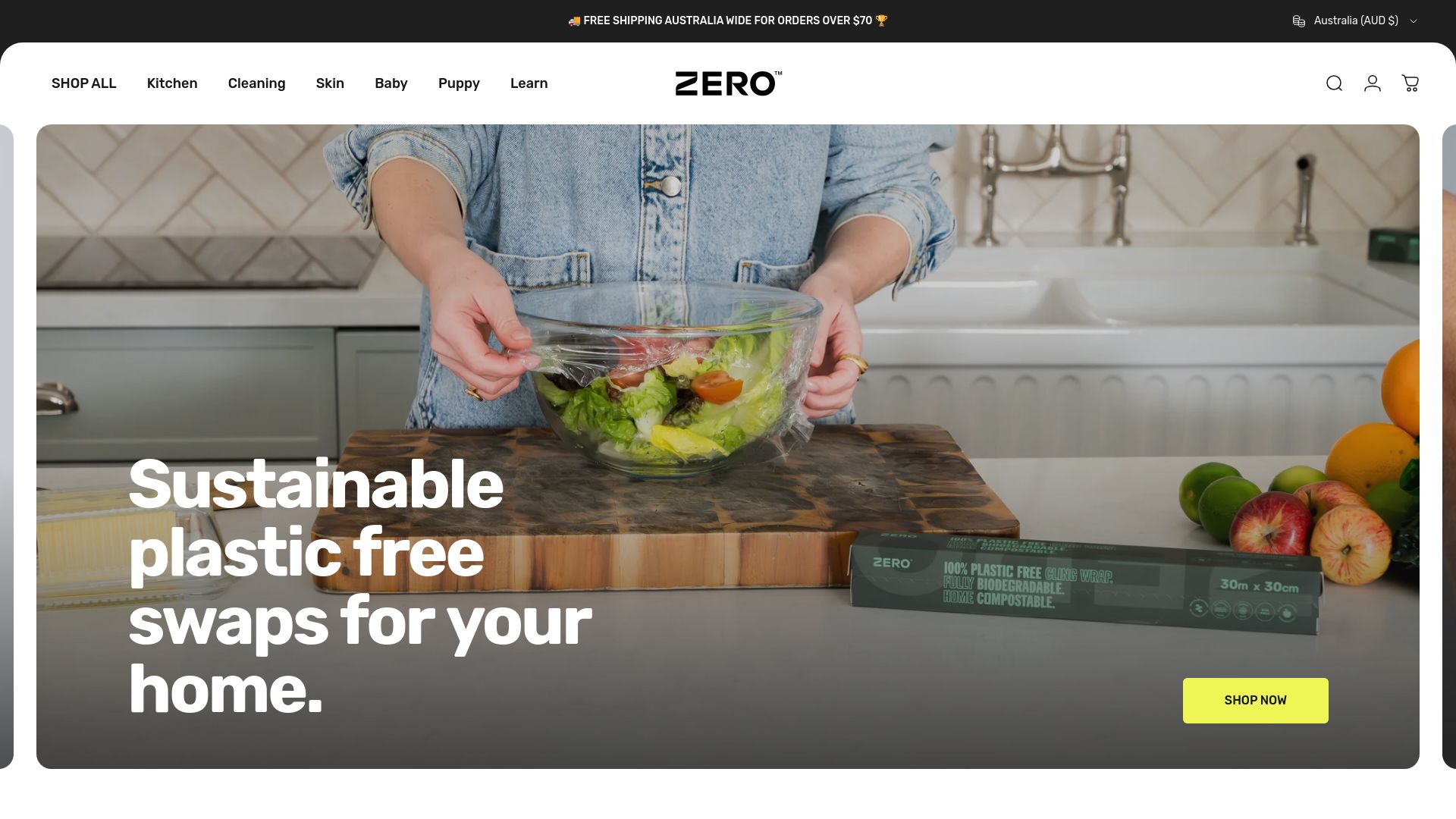
For households that want to move away from single-use plastic without the guesswork of decoding vague labels, Thezerostore’s product pages list the specific biopolymer, the applicable certification, and whether the item is suitable for home composting or council food-waste collection. Businesses looking for certified compostable solutions at scale can browse the commercial and hospitality range. Browse the full range at Thezerostore and check the product page for the certification details that tell you exactly where each item belongs at end of life.
Useful sources and further reading
- Ellen MacArthur Foundation: Compostable, biodegradable, and bio-based plastics — clear definitions and the relationship between the three terms; a good starting point for anyone new to the topic.
- EEA: Biodegradable and compostable plastics — European Environment Agency analysis of real-world performance, including why PLA requires industrial conditions.
- AIMPLAS: Biodegradability, compostability and certifications — technical explanation of testing conditions, including the 90% biodegradation within 180 days at 58 °C benchmark.
- BPI: Biodegradable vs compostable — the Biodegradable Products Institute’s guidance on why unqualified ‘biodegradable’ claims mislead consumers.
- MDPI review: Biodegradability of bioplastics — peer-reviewed comparison of how PLA, PBAT, PHA, and starch-based materials perform across managed and unmanaged environments.
- Compost Connect: Biodegradable vs compostable — practical consumer guidance on matching products to waste infrastructure.
- StopWaste: Compostable plastic fact sheet — clear explanation of microplastics risk and why certification does not guarantee breakdown in all settings.
- SEALIVE policy briefing: Definitions around biodegradable and compostable plastics — policy-level summary of environment-dependence and the difference between industrial and natural settings.
- WRAP (wrap.ngo) — UK-specific guidance on local authority food-waste collections and which compostable materials councils accept; the most practical resource for UK disposal decisions.
- EN 13432 and PAS 100 — the European packaging compostability standard and the British Standards Institution compost quality specification; both are referenced by UK councils and composting facilities.
This article is general information, not professional or legal advice. Disposal rules vary by local authority; confirm current guidance with your council or WRAP before changing your waste habits.
Share:
Is PLA BPA free? What UK shoppers need to know
How to store vegetables without plastic at home